

Introduction
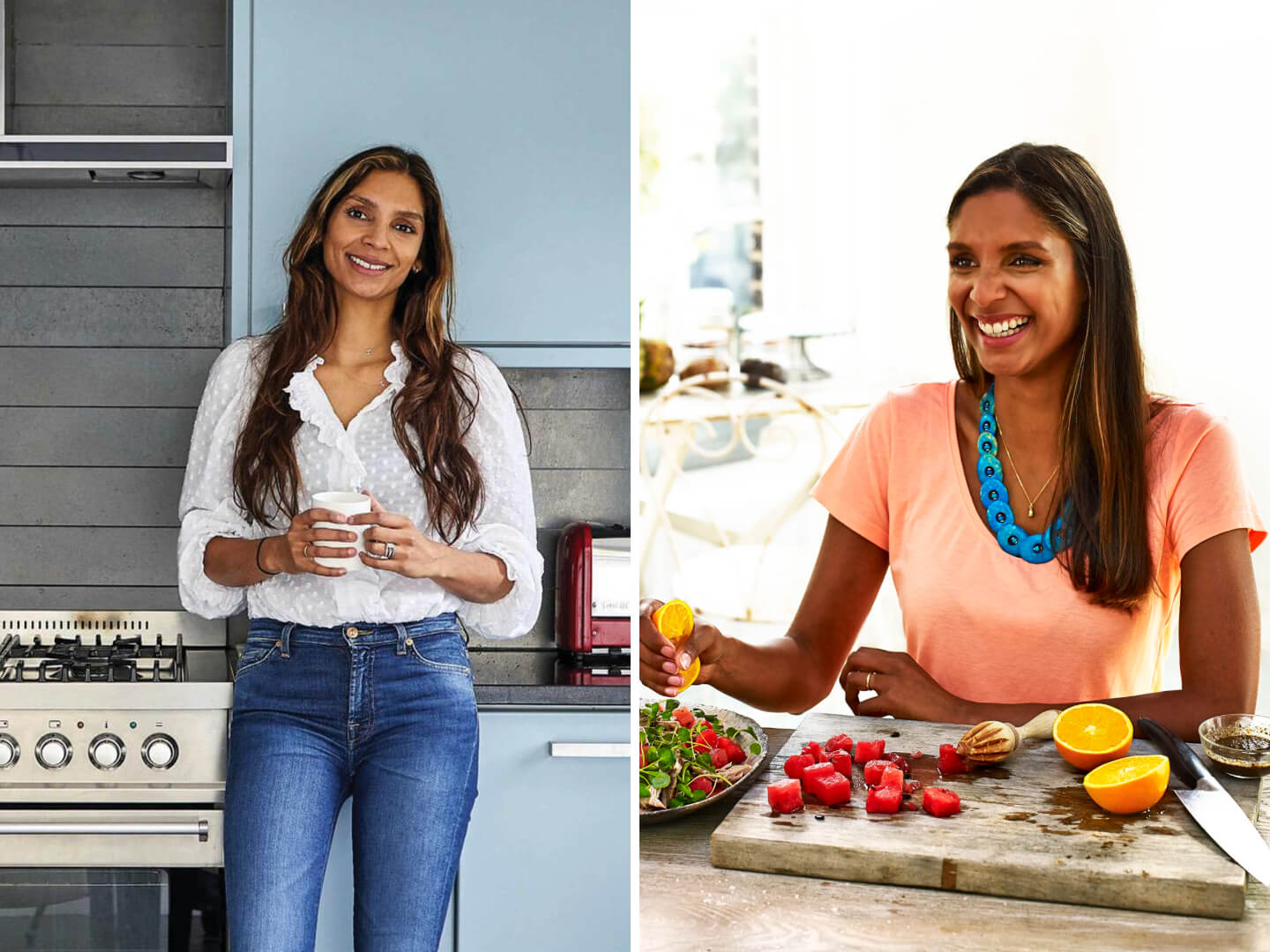
Shivi Ramoutar is a Trinidad-born chef, food writer, cookbook author and television presenter whose work brings Caribbean flavours into modern British home cooking. Her recipes are colourful and generous, yet they are also practical enough for busy families, new cooks and anyone interested in reducing kitchen waste.
Her career has developed through supper clubs, cookbooks, television appearances, brand partnerships and culinary collaborations. Behind that success is a personal food journey shaped by Trinidad, New York, the English countryside and London. Each place contributed something important to the way she understands ingredients, family meals and cultural identity.
Who Is Shivi Ramoutar?
Shivi is best known for giving traditional Caribbean ideas a contemporary and approachable character. Rather than presenting Caribbean cuisine as a limited collection of well-known dishes, she shows it as a broad food culture influenced by African, Indian, European, Chinese, Middle Eastern and Indigenous traditions.
Professionally, she works across several areas of the food industry. She develops recipes, writes cookbooks, cooks on television and presents lifestyle programmes. She has also created menus for major commercial partnerships, including her work with P&O Cruises.
What makes her public identity distinctive is the combination of enthusiasm and usefulness. Her dishes may contain tropical flavours and lively spices, but they are usually designed around the real concerns of home cooks, including limited time, food costs, leftovers and different family preferences.
Early Life
Shivi Ramoutar was born in Trinidad into a culturally diverse family. She spent parts of her childhood in Trinidad, New York and England before eventually making London her home.
Moving between countries exposed her to different habits, ingredients and food traditions from a young age. Trinidad provided the flavours and memories that remained at the centre of her cooking, while New York and Britain introduced her to other cuisines and ways of preparing meals.
This international upbringing did not weaken her connection to Caribbean food. Instead, it gave her a wider perspective from which to interpret it. Her recipes often feel rooted in personal memory while remaining open to new influences and modern cooking methods.
Trinidadian Roots
Trinidadian cooking cannot be described through only one style. The island’s food reflects generations of migration and cultural exchange, with curries, rotis, stews, fried snacks, seafood dishes, tropical fruit and pepper sauces all sharing the same culinary landscape.
For Shivi, these flavours are closely connected with childhood, comfort and family life. The Caribbean food prepared by her parents remained familiar even as the family moved between different countries.
That continuity helped turn cooking into something deeper than a professional interest. Food became a way of maintaining identity and remembering home, even when the surroundings changed.
Her work respects that emotional connection without treating traditional recipes as untouchable. She uses familiar Caribbean flavours as a foundation, then adapts ingredients, presentation and preparation methods for modern households.
Family Influence
Home cooking played an important role in Shivi’s development. Meals prepared by her parents provided a sense of familiarity across different countries and showed how food could preserve family traditions.
This influence can still be seen in the warmth of her recipes. Her cooking is rarely created only to demonstrate technical skill. It is generally meant to be shared, served generously and enjoyed around a family table.
Shivi lives with her husband and three children. Although family life influences her practical approach to cooking, she does not make private details the main subject of her public career.
Her professional work remains focused primarily on recipes, television, food writing and Caribbean culture.
A Career Change
Shivi did not begin her professional life as a television chef. Before entering the food industry, she worked in the City but gradually realised that her career did not provide the creative satisfaction she wanted.
During that period, she began returning to the Caribbean dishes she had grown up eating. Cooking offered comfort, creativity and a stronger sense of personal purpose.
As she prepared those familiar meals more frequently, she started a supper club with a friend. That experience helped her understand that food could become more than a personal passion. It could become the foundation of a new professional life.
Leaving a conventional career for the food industry involved uncertainty. However, the supper club allowed her to test recipes directly with guests, develop confidence and establish the modern Caribbean identity that later shaped her books and television work.
Supper Club Beginnings
Supper clubs gave Shivi an opportunity to introduce diners to Caribbean food in a personal and informal setting. They also allowed her to move beyond the expectation that Caribbean cuisine should be represented only through a small number of famous dishes.
Her menus could be experimental, seasonal and closely connected to her own memories. Traditional spices and ingredients were combined with modern techniques, while the presentation reflected contemporary London dining.
These events helped her build an early reputation. They also led to restaurant opportunities, collaborations and the eventual development of her first cookbook.
The supper-club period was important because it gave Shivi the freedom to discover her own style before she became widely known through publishing and television.
Modern Caribbean Cooking
Shivi’s cooking style is often described as modern Caribbean. This does not mean removing the identity of traditional food. Instead, it means understanding the essential flavours of a dish and finding fresh ways to present them.
Her recipes often use ingredients such as coconut, lime, plantain, mango, sweet potato, seafood, aromatic herbs and warming spices. Chilli may add heat, but it is usually balanced with sweetness, acidity and richness.
She also adapts dishes according to season, availability and household needs. This makes Caribbean-inspired cooking more approachable for people who may not have access to specialist shops or extensive experience with the cuisine.
Her food combines bold flavour with simple techniques. That balance allows readers and viewers to explore something new without feeling overwhelmed by complicated instructions.
Caribbean Modern
Shivi’s first cookbook, Caribbean Modern, was published in 2015. The book introduced readers to an energetic interpretation of Caribbean cooking through recipes featuring strong flavours, tropical ingredients and contemporary combinations.
Its importance lies in the range of food it presents. Caribbean cuisine is sometimes reduced in popular media to only a few recognisable meals. Shivi challenged that limited view by showing how varied and inventive the cooking of the region can be.
The book included dishes such as buttermilk fried chicken, jerk pulled pork with watermelon salad and crab backs with fried bakes.
These recipes demonstrated her ability to combine familiar Caribbean traditions with playful presentation and practical cooking methods.
A tenth-anniversary edition later brought renewed attention to the Caribbean foundation of her career and showed that her first collection continued to appeal to readers.
The Ice Kitchen
Her second major cookbook, The Ice Kitchen: Fast Fresh Food to Fill Your Family and Your Freezer, was published in 2020.
The book marked a shift from primarily celebrating Caribbean cuisine towards solving one of the most familiar problems in family cooking: how to prepare enjoyable meals when time is limited.
Shivi encouraged readers to see the freezer as an everyday kitchen tool rather than a place where forgotten leftovers are stored.
Many of the recipes were designed so that one portion could be eaten immediately while another could be frozen for a future meal. This method helped reduce waste, lower costs and make busy evenings easier.
The book also included freezer-friendly sauces, flavoured butters and meal components that could quickly improve a simple dish.
This practical thinking later became an important part of Shivi’s television recipes, where she frequently demonstrated meals that could be portioned, frozen, reheated or adapted.
Cook Clever
In 2023, Shivi published Cook Clever: One Chop, No Waste, All Taste.
The book focused on reducing unnecessary work in everyday cooking through supermarket shortcuts, simple ingredients and carefully planned recipes.
The “one chop” idea was not intended to discourage fresh cooking. Instead, it challenged the belief that a satisfying meal must involve long preparation, several pans and a large amount of washing up.
Shivi developed the recipes so readers could achieve strong flavour without carrying out every traditional preparation step.
Reducing food waste was another major theme. Ingredients were selected so that they could be used efficiently, while leftovers and fridge contents were treated as useful opportunities rather than unwanted extras.
The overall message was that convenient food could still feel fresh, generous and thoughtfully prepared.
Writing Style
Shivi writes for ordinary home cooks rather than professional chefs. Her instructions are generally friendly, flexible and aware of the pressures surrounding family meals.
Instead of demanding perfection, she encourages confidence. Shortcuts are treated as sensible choices, freezer ingredients are welcomed and substitutions are often part of the process.
This tone helps readers feel that cooking is manageable even when their schedules, budgets or experience are limited.
Her main books also show the range of her interests. The first focuses on Caribbean identity, the second turns the freezer into a planning tool and the third reduces preparation and waste.
Together, they present a consistent philosophy: everyday food should be exciting, but it should also work in real life.
Television Career
Shivi’s television work has allowed her to share that philosophy with a much larger audience. She has appeared as a chef, guest and presenter on several well-known British programmes.
Her television credits include Saturday Kitchen, This Morning, Garraway’s Good Stuff, Martin and Roman’s Weekend Best and Oti Mabuse’s Breakfast Show.
Television suits her approachable cooking style. She explains recipes clearly, responds naturally to presenters and keeps the focus on meals viewers can realistically recreate at home.
Her warm personality also helps unfamiliar ingredients feel less intimidating. Rather than presenting food as something highly technical, she makes cooking appear social, enjoyable and flexible.
This Morning
Shivi’s appearances on This Morning demonstrate the variety of her television cooking.
She has presented freezer-friendly curries, quick wraps, traybakes, quesadillas, seafood dishes and recipes designed for school holidays or busy working weeks.
One of her cooking segments showed viewers how to prepare a homemade chicken katsu curry and freeze extra portions. Another transformed fish fingers into affordable wraps with chipotle mayonnaise and a pea-based alternative to guacamole.
These dishes were not strictly Caribbean, which is important when understanding her career. Her heritage remains central to her public identity, but she is also a versatile family-food presenter who works confidently with different cuisines and everyday ingredients.
Farmhouse Breakfast
A major development in her presenting career came with Jimmy & Shivi’s Farmhouse Breakfast, which she co-hosts with farmer and television presenter Jimmy Doherty.
The programme is filmed around Jimmy’s Suffolk farm and combines cooking with animals, gardening, countryside activities, crafts and celebrity guests.
Shivi brings energy and culinary creativity, while Jimmy contributes farming knowledge and an understanding of produce, wildlife and rural life.
Together, they prepare outdoor meals and encourage viewers to become more curious about where food comes from.
Their different backgrounds create a natural balance. Shivi often brings colourful recipes and global flavours, while Jimmy connects the dishes with seasonal British ingredients and farm life.
P&O Cruises
Shivi’s Caribbean expertise also led to a partnership with P&O Cruises.
She joined the company’s culinary team as a Local Food Hero and created Caribbean-inspired dishes for the cruise ship Arvia during its Caribbean season.
Her menus were served in selected dining venues and connected the cruise experience with regional ingredients and flavours.
The partnership allowed passengers to experience the Caribbean through food rather than treating the region only as a holiday destination.
It also marked an important professional achievement, as it placed Shivi alongside other established chefs and culinary personalities.
Food and Identity
Shivi’s contribution matters because food media can influence how cultures are understood.
Caribbean cooking has long been part of British life, but its full diversity has not always received equal attention in mainstream publishing and television.
By discussing her Trinidadian roots and presenting Caribbean food with confidence, Shivi helps place the cuisine within everyday British cooking.
Her work suggests that dishes connected to migration, memory and family history do not need to remain outside the culinary mainstream.
At the same time, she does not present identity as something fixed. Her food reflects movement, adaptation and life across several countries.
This makes her work especially relevant to families whose traditions have also changed across generations and locations.
Family Cooking
Becoming a parent appears to have strengthened the practical side of Shivi’s work.
Her recipes increasingly address the realities of cooking for a household, including limited preparation time, different tastes and the need to avoid wasting ingredients.
Family cooking in her books is not bland or overly cautious. She maintains a strong interest in seasoning, texture and colour while making recipes easier to organise.
This balance explains much of her popularity. Readers do not have to choose between flavour and convenience. Her approach shows that careful planning can make both possible.
Reducing Waste
Food waste is one of the most consistent practical themes in Shivi’s recent work.
She encourages home cooks to plan meals carefully, reuse ingredients and understand how freezing can extend the life of prepared food.
Her approach does not make reducing waste feel restrictive. Instead, she presents it as a creative way to save money and discover new combinations.
Leftover vegetables may become part of a soup, sauce or traybake, while cooked meat can be transformed into wraps, pies or rice dishes.
Through this method, she shows that economical cooking can still feel generous and enjoyable.
Caribbean Ingredients
Shivi regularly introduces audiences to ingredients associated with Caribbean cooking.
Plantain, coconut, lime, mango, sweet potato, chilli, rum and aromatic spices appear frequently across her recipes.
She explains how these ingredients can be used without making the process feel complicated.
Plantain may be fried, roasted or added to savoury dishes. Coconut can provide sweetness and richness, while lime gives freshness to marinades, sauces and desserts.
Her recipes allow British home cooks to understand these ingredients through familiar formats, making Caribbean flavours easier to include in everyday meals.
Public Personality
On screen, Shivi appears warm, lively and conversational. She presents cooking as a source of enjoyment rather than a test of technical ability.
Her personality also reflects the food she prepares. Both feel colourful, welcoming and designed to be shared.
Although she discusses family life when it relates to cooking, she maintains reasonable boundaries around private matters.
Publicly available information confirms that she has a husband and three children, but she avoids turning her family relationships into a major part of her media profile.
Achievements
Shivi Ramoutar’s career includes successful cookbooks, regular appearances on leading British television programmes, a continuing presenting role and an important cruise-line partnership.
More importantly, she has built a recognisable professional identity.
Her work connects Caribbean heritage with the practical concerns of modern families, showing that cultural food can be respected without becoming difficult or inaccessible.
From supper clubs to national television, her progress has been gradual and grounded in a consistent love of flavour.
She has not abandoned the dishes that first gave her comfort. Instead, she has found new ways to share them with a wider audience.
Future Journey
Shivi’s recent work suggests that television, publishing and Caribbean-focused collaborations will remain important parts of her career.
Her continued presence on television and the renewed interest in her early cookbook demonstrate lasting public interest in both her presenting ability and culinary roots.
Future projects have not all been publicly confirmed, so predictions should be made carefully.
However, her established range gives her several possible directions, including further television series, new family cookbooks, travel-based food programmes and more menu collaborations.
Whatever comes next, the strongest part of her professional identity will probably remain unchanged: food that carries personal history while still making sense for the way people cook today.
Conclusion
Shivi Ramoutar’s biography tells the story of a chef who transformed childhood flavours into a successful and varied public career.
Born in Trinidad and raised across different countries, she developed a cooking style that combines Caribbean memory, international experience and the everyday needs of British households.
Her cookbooks celebrate bold food while addressing waste, cost and limited time. Her television appearances make unfamiliar ingredients feel welcoming, and her presenting work shows a personality naturally suited to family entertainment.
Throughout every stage of her journey, Caribbean food has remained more than a professional theme. It is the emotional and creative foundation of her work.
By carrying those flavours from family kitchens to supper clubs, cookbooks, television studios and cruise-ship menus, Shivi Ramoutar has helped a wider audience understand and appreciate the richness of Caribbean cuisine.
