

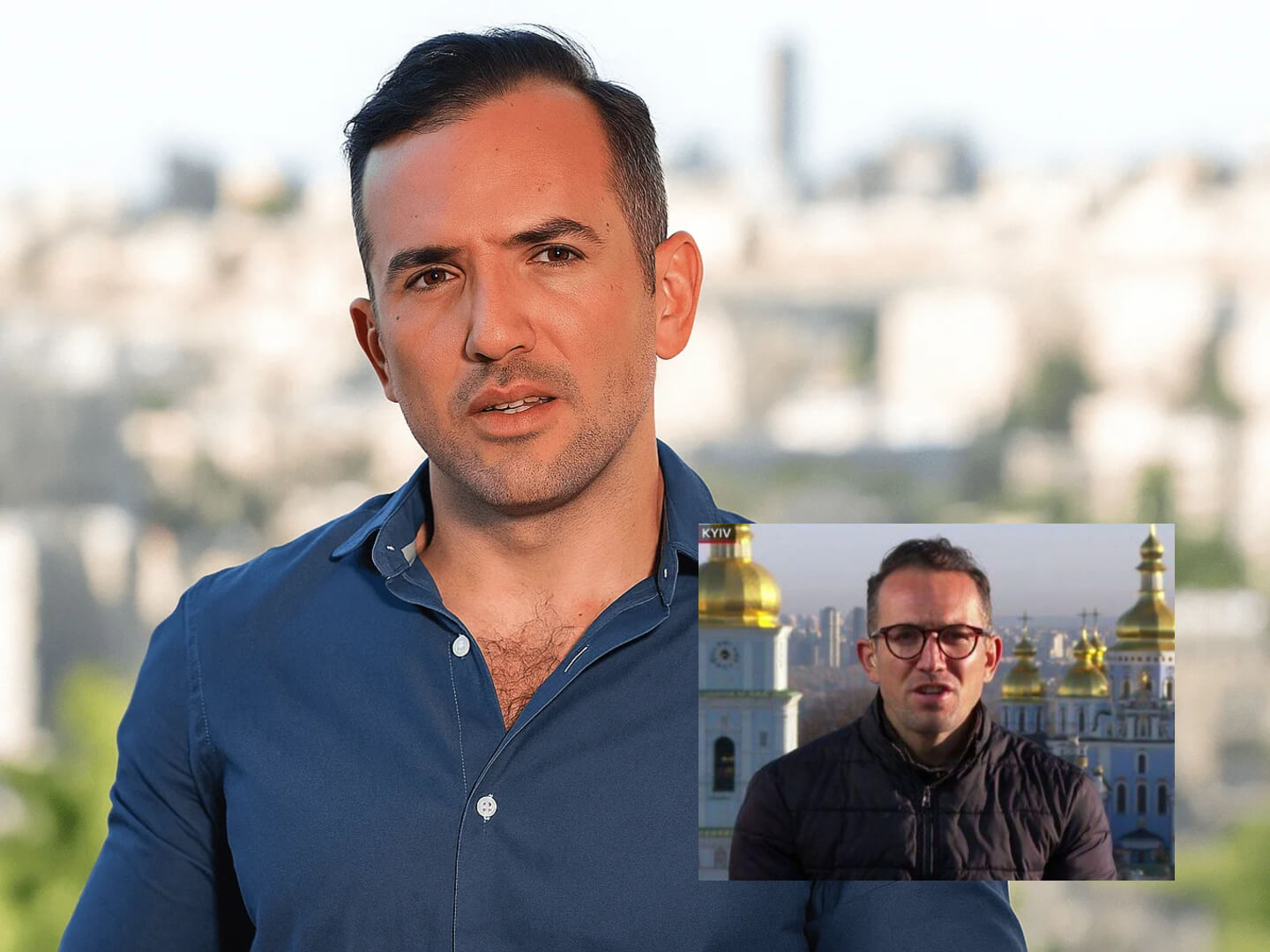
Hugo Bachega has become a familiar presence in international news through his calm reporting from countries experiencing war, political instability and humanitarian emergencies. As a BBC correspondent, he has reported from Ukraine and across the Middle East, often explaining fast-moving events while working close to the communities directly affected by them.
His professional journey did not begin in front of a television camera. It developed gradually through newsroom experience, political reporting and assignments in several major cities. From his early work with Reuters in Brazil to his present position covering the Middle East, Bachega has built a career around international affairs and reporting from difficult environments.
Much of the public interest surrounding him comes from his frontline appearances. However, reliable information about his private life remains limited. A responsible look at his story must therefore focus on his verified professional record rather than speculation about his age, family, relationships or finances.
Who Is Hugo Bachega?
Hugo Bachega is a Brazilian-born British journalist working for BBC News. His public professional profiles identify him as a BBC Middle East correspondent, with Beirut serving as the main base for his regional reporting. From there, he covers events involving Lebanon, Israel, Gaza, Syria and the political forces shaping the wider region.
Foreign correspondents are expected to do more than describe individual events. They must understand history, local politics, regional alliances and the language used by governments and armed organizations. Bachega’s reports regularly place breaking developments within a wider context, helping audiences understand why an event in one country may affect several neighbouring states.
His work reaches audiences through live television reports, written articles, radio programmes, interviews, documentaries and digital videos. This variety reflects the changing responsibilities of modern correspondents, who increasingly produce journalism for several platforms rather than working exclusively in television or print.
Brazilian Beginnings
Bachega’s professional story began in Brazil. He started his career as an intern with Reuters in São Paulo, an early position that gave him experience inside one of the world’s largest international news organizations.
Archived reports show that Bachega was contributing to stories from Brazil by the late 2000s and early 2010s. His bylines appeared on reports involving Brazilian politics, business, public policy and major international companies operating in the country. His assignments included stories about Brazilian soldiers injured during the Haiti earthquake and reports on economic competition and industrial investment.
These assignments required accuracy, speed and a strong understanding of complicated subjects. Reporting for a global news agency also means writing for readers who may know very little about the country being discussed. A correspondent must therefore provide enough context without losing sight of the central facts.
His Reuters experience appears to have provided a strong foundation for the international work that followed. News-agency reporting is often disciplined and direct, and traces of that approach can still be seen in Bachega’s later broadcasts, where he usually explains developments in clear language without making himself the focus of the report.
An International Path
Bachega’s career eventually moved beyond Brazil. During different stages of his professional journey, he has reportedly been based in Cairo, London, Washington, Kyiv and Beirut. He has also spoken about living in the Middle East as a student before later returning to the region as a professional correspondent.
Working in several international capitals can significantly shape a journalist’s understanding of foreign affairs. Cairo offers close access to Arab politics and regional diplomacy. London is a major global media centre, while Washington provides direct exposure to American foreign policy and international decision-making.
Kyiv and Beirut placed Bachega much closer to active conflicts. In these locations, political announcements could quickly be followed by missile attacks, displacement or sudden changes in military activity. Reporting under such circumstances requires both analytical knowledge and the ability to respond calmly to unexpected danger.
His movement between different regions also demonstrates how international correspondents develop. Rather than becoming known through a single television appearance, they build their careers through years of travel, research, source development and experience in unfamiliar surroundings.
Work at the BBC
Bachega later became one of the BBC journalists responsible for explaining major international stories to a worldwide audience. His assignments have placed him at the centre of conflicts that are politically sensitive, emotionally difficult and frequently surrounded by competing claims.
A BBC correspondent working abroad must collect information from officials, witnesses, humanitarian organizations and local residents. The journalist must then compare those accounts with verified footage, official statements and information gathered by other reporters. This process becomes especially important during war, when false claims and incomplete reports can spread quickly.
Bachega’s role involves both prepared journalism and live broadcasting. A written report can be edited and updated before publication, but a live appearance gives a journalist only a short period to organize complex information. The correspondent may also have to answer unexpected questions from presenters while monitoring developments happening nearby.
His reporting style is generally measured and explanatory. Even when events are unfolding quickly, he tends to separate confirmed information from claims made by the parties involved. That distinction is central to responsible conflict journalism.
Reporting From Ukraine
Hugo Bachega gained wider international recognition through his reporting from Kyiv during Russia’s war against Ukraine. He covered missile attacks, military developments, diplomatic decisions and the effect of the conflict on people living in the Ukrainian capital.
One of the most widely shared moments of his career occurred on 10 October 2022. Bachega was speaking live from Kyiv when explosions were heard nearby during a wave of Russian missile attacks. He stopped the broadcast and moved away from the camera to seek safety. The incident demonstrated how quickly an apparently controlled live report can turn into a dangerous situation.
The moment attracted attention because viewers could see the risks faced by journalists covering the war. However, it also showed appropriate professional judgement. Continuing to speak for the sake of television would have served no useful purpose when the safety of the correspondent and production team was uncertain.
Bachega later continued reporting from Kyiv. His written work included coverage of missile and drone attacks, Ukrainian air-defence claims and Russian statements about military targets. These stories required careful attribution because both governments were presenting different accounts of the same events.
His Ukraine reporting was not limited to military statistics. Like many experienced war correspondents, he also examined the effect of repeated attacks on civilians, public services and daily life. That human focus helps audiences understand that a conflict is experienced through interrupted routines, damaged homes, fear and uncertainty, not only through changes on a battlefield map.
The Move to Beirut
In November 2023, Bachega publicly announced a new stage in his career as the BBC’s Middle East correspondent based in Beirut. He described a long connection with the region, recalling that he had first lived there as a student when he was 20 and had returned many times afterward.
Beirut is an important location for international reporting. Lebanon shares borders with Israel and Syria, while its domestic politics are connected to wider tensions involving Iran, Hezbollah, Gulf countries, the United States and European governments.
The city also offers access to communities affected by regional conflicts. From Beirut, journalists can travel to southern Lebanon, follow political developments in the capital and monitor events across the Syrian border. At the same time, changing security conditions can make movement difficult or dangerous.
Bachega took up the role during an especially tense period. The war in Gaza had increased fears of a broader regional confrontation, while exchanges of fire between Israel and Hezbollah were displacing residents on both sides of the Israeli-Lebanese border.
Lebanon and Hezbollah
A significant part of Bachega’s Middle East reporting has focused on Lebanon and Hezbollah. The subject requires careful explanation because Hezbollah is simultaneously an armed organization, a political force and a provider of social services within parts of Lebanese society. Its military relationship with Israel and its support from Iran also give it influence beyond Lebanon.
Bachega has reported from southern Lebanon, where repeated attacks have affected villages, emergency workers and families living close to the border. His reports have examined the insecurity felt by communities facing the possibility of renewed escalation.
In 2025, he presented a BBC documentary titled Lebanon: Hezbollah in Trouble. The programme followed his journey through Hezbollah-supporting areas and examined the group’s position after a damaging conflict with Israel. It considered whether military losses, destruction and pressure to disarm had changed attitudes among its traditional supporters.
This type of reporting differs from a short television update. A documentary allows more time to interview residents, examine political loyalties and explore contradictions within a community. It can reveal how people may criticize the consequences of a conflict while remaining emotionally or politically connected to the organization involved.
His more recent work has continued to cover ceasefire violations, rescue workers, Israeli strikes and Hezbollah’s influence in southern Lebanon. His published reports identify him as an active Middle East correspondent following these developments closely.
Israel and Gaza
Bachega has also contributed to BBC coverage of the war between Israel and Hamas and its regional consequences. Reporting on this conflict presents exceptional difficulties because every description, casualty figure and military claim may be closely examined or disputed.
A correspondent must explain the official position of Israel, statements made by Hamas, information from Palestinian authorities and findings from international or humanitarian organizations. Presenting these accounts does not mean treating every claim as proven. Careful attribution allows the audience to understand who is providing the information and whether it has been independently verified.
Bachega has discussed the human and political consequences of the conflict, including what had been lost after prolonged fighting and whether diplomatic negotiations had created a realistic path toward peace.
His regional role also requires him to show how the Gaza conflict affects Lebanon, Syria, Iran and other countries. A strike, assassination or failed negotiation can alter decisions made by several armed groups and governments. The story is therefore not limited to events inside Gaza or Israel.
Syria and Regional Change
The fall of Bashar al-Assad’s government in December 2024 created another major reporting challenge. The rapid political change affected Syria itself while also weakening established regional relationships involving Russia, Iran and Hezbollah.
Bachega contributed to discussions examining the final period of Assad’s rule and the uncertainty surrounding Syria’s future. Reporting during such a transition requires caution because institutions may collapse faster than journalists can verify what has replaced them.
Stories from Syria also demand historical context. Audiences need to understand the civil war, mass displacement, foreign military involvement and the competing groups seeking political influence. Without that background, the removal of a leader can appear to be a single event rather than the result of a long and devastating conflict.
Bachega’s experience in Lebanon gives him a useful position from which to examine these changes. The two countries are connected by geography, migration, security concerns and decades of political involvement.
A Human Focus
One noticeable quality in Hugo Bachega’s reporting is his attention to ordinary people living through major political events. Government announcements and military briefings provide essential facts, but they cannot fully describe what a conflict means for families forced to leave their homes.
By interviewing residents, medical workers and displaced communities, a correspondent can reveal the distance between political language and lived experience. A ceasefire may sound decisive during a press conference while remaining fragile for people who continue hearing aircraft or explosions.
This approach does not replace factual reporting. Instead, it gives meaning to the facts. The number of displaced people becomes easier to understand when audiences hear one family explain why they left, what they carried and whether they believe they will return.
Bachega’s documentary work in Lebanon reflects this method. Rather than discussing Hezbollah only through speeches by leaders, he visited communities where the organization has historically maintained support and allowed residents to describe their own views.
Working Under Pressure
Conflict correspondents operate within carefully planned security systems, but risk can never be removed completely. Teams must consider safe locations, evacuation routes, protective equipment, transport, communications and the distance from potential military targets.
The reporter visible on screen is only one member of a larger team. Camera operators, producers, local journalists, drivers, translators and security advisers all contribute to the final report. Local colleagues are especially important because they understand communities, language and conditions that may not be obvious to a visiting correspondent.
The Kyiv incident in 2022 provided a rare public view of this reality. Bachega’s decision to leave the live position showed that personal safety and team safety take priority over continuing a broadcast.
Emotional pressure is another part of the profession. Correspondents repeatedly witness grief, destruction and fear, yet they must remain focused enough to verify information and produce an accurate report. Calm delivery should not be mistaken for emotional distance. It is often the discipline required to communicate clearly.
Accuracy and Responsibility
International reporting carries a high level of responsibility because audiences may form their understanding of a conflict from only a few minutes of coverage. Incorrect wording can create a false impression, while unverified claims may contribute to misinformation.
Bachega’s reports often use careful attribution, identifying whether information comes from a government, military, local authority or witness. This allows readers and viewers to distinguish an established fact from a claim that remains disputed.
Responsible correspondents must also avoid presenting complex communities as a single group. Residents of southern Lebanon, for example, may share a location or religious background while holding very different opinions about Hezbollah, Israel and the Lebanese government.
The same principle applies across the region. Israeli, Palestinian, Lebanese and Syrian societies contain political divisions that cannot be explained through simple labels. Detailed reporting gives those differences space rather than reducing an entire population to the position of its leaders.
Public and Private Life
Despite appearing regularly on international television, Hugo Bachega keeps most of his personal life away from public attention. Reliable professional profiles confirm his nationality, career path and reporting roles, but they do not provide a verified date of birth, details about his parents or clear information about his marital status.
Some online biography pages publish exact ages, relationship claims, salaries or estimated net worth figures. These details should not be repeated without trustworthy evidence. The absence of confirmed information is not a gap that needs to be filled with speculation.
His professional record already offers enough material for a substantial profile. Archived reports, BBC journalism, public interviews and documentary work provide a clearer picture of his development than unsupported personal claims could.
Respecting this boundary also reflects an important principle of responsible publishing. A journalist who reports on public events is not automatically required to disclose every part of his private life.
Why His Work Matters
Hugo Bachega’s career demonstrates the continuing importance of correspondents who live close to the regions they cover. Remote analysis can explain military strategy or diplomacy, but reporters on the ground can observe how official decisions affect local communities.
His path from São Paulo to Cairo, London, Washington, Kyiv and Beirut has given him experience across several political environments. Each assignment appears to have added another layer to his understanding of how local events become international stories.
The strongest aspect of his work is not one dramatic broadcast. It is the consistency required to report through long periods of uncertainty, return to affected communities and explain developments after global attention begins to move elsewhere.
Conclusion
Hugo Bachega has developed from a Reuters intern in São Paulo into an experienced BBC international correspondent reporting from some of the world’s most closely watched conflict zones. His career has taken him through major media and political centres before placing him on the ground in Ukraine and the Middle East.
His reporting from Kyiv showed the immediate dangers of covering a war, while his work from Beirut has explored the complicated relationships connecting Lebanon, Hezbollah, Israel, Gaza, Syria and Iran. Through television, written journalism and documentaries, he combines breaking-news coverage with attention to the people living behind the headlines.
Public information about his personal life remains limited, and there is no need to replace that privacy with unsupported claims. His verified career already tells a meaningful story: one of gradual professional growth, international experience and a commitment to explaining difficult events with clarity, composure and human understanding.
