

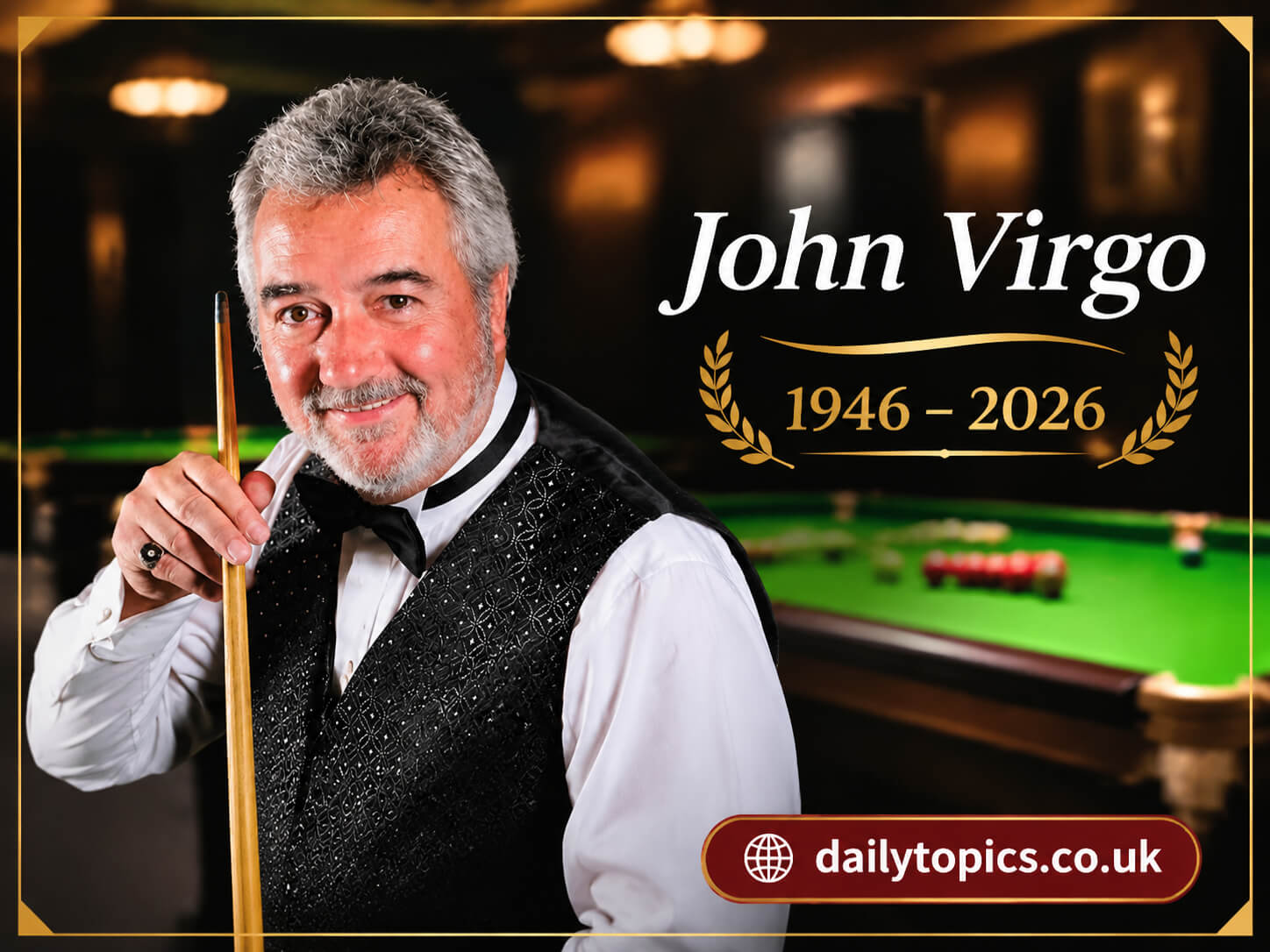
John Virgo was one of the most recognisable personalities in British snooker. Known for his playing ability, quick humour and memorable television appearances, he became a familiar face to generations of sports fans. His work as a professional snooker player, BBC commentator and co-presenter of Big Break made him a much-loved figure beyond the sporting world.
Following his death on 4 February 2026, aged 79, many people began searching for information about John Virgo’s illness, health problems and cause of death. Questions also emerged about whether he had been experiencing a serious medical condition before his final days.
Although reports have provided some insight into the circumstances surrounding his death, it is important to distinguish confirmed information from speculation. His passing was sudden, and people close to him indicated that he had remained active shortly beforehand. His life and achievements deserve as much attention as the circumstances of his death.
Who Was John Virgo?
John Virgo was born in Salford, England, in March 1946. He developed an interest in snooker at a young age and gradually turned his passion into a professional career. His talent helped him establish himself among the leading players of his generation.
One of his biggest achievements came in 1979, when he won the UK Championship. During the same year, he reached the semi-finals of the World Snooker Championship, demonstrating his ability to compete against some of the strongest players in the sport.
After retiring from professional snooker in 1994, Virgo successfully moved into television broadcasting. His detailed knowledge, natural humour and distinctive commentary style made him a favourite among viewers.
He also became widely recognised through Big Break, the BBC television programme he co-presented with comedian Jim Davidson between 1991 and 2002. The show introduced his personality to audiences who might not otherwise have followed professional snooker.
John Virgo Illness: What Was Known About His Health?
Interest in John Virgo’s illness increased following news of his death. Many fans wanted to understand whether he had experienced health problems before February 2026 or whether his passing had been completely unexpected.
Available reporting suggests that Virgo had experienced a longstanding neck problem. According to comments attributed to his close friend James Malyon, the condition affected his golf swing and was among the considerations behind spending more time in Spain, where the warmer climate suited him.
However, there is no reliable public evidence establishing that this neck problem was connected to his death. It should not be confused with a serious or life-threatening medical diagnosis.
His friend also described him as being in good spirits shortly before the emergency. Virgo had reportedly continued enjoying everyday activities, meeting friends and travelling for professional commitments.
These accounts provide some insight into his final period of life, although they do not reveal his complete medical history. His private health information was not fully available to the public.
What Was John Virgo’s Cause of Death?
John Virgo died on 4 February 2026, aged 79. He passed away in hospital in Spain after experiencing a sudden medical emergency at home.
According to an account given by his close friend James Malyon, Virgo’s wife, Rosie Ries, contacted him during the early hours after her husband became unwell. An ambulance was called, and Virgo was taken to Xanit Hospital in Benalmádena.
Malyon subsequently told reporters that Virgo had suffered a ruptured aorta. His account described how quickly the situation developed and how medical staff were unable to save him.
The aorta is the body’s main artery, carrying blood away from the heart to the rest of the body. A rupture involving this major blood vessel is an extremely serious medical emergency.
There is an important distinction between the initial official announcement and subsequent reporting. The World Snooker Tour confirmed Virgo’s death but did not initially provide a medical cause. The more specific information about a ruptured aorta came from his close friend speaking to the press.
Therefore, readers should understand the source of the reported medical explanation rather than treating every detail as part of an official medical statement.
Did John Virgo Have an Underlying Illness?
One of the most frequently asked questions concerns whether John Virgo had been suffering from an underlying illness before his death.
According to his friend James Malyon, there was no known ongoing illness that explained the emergency. Malyon described Virgo as being in good form and said that his final day had appeared normal.
He had reportedly continued his usual activities and remained involved in professional snooker shortly before his death. These details suggest that his passing came as a considerable shock to those around him.
However, it would be inaccurate to make absolute claims about his medical history. His complete medical records have not been made public, and the absence of a publicly disclosed diagnosis does not prove that he had no other health concerns.
What can reasonably be said is that no publicly established long-term illness has been identified as the cause of his death. The reported medical event was a ruptured aorta rather than a publicly confirmed terminal condition.
His Final Days and Last Television Appearance
One of the most striking aspects of John Virgo’s death was how recently he had been working.
His final BBC commentary appearance came during the 2026 Masters final, when Kyren Wilson defeated John Higgins. This was just 17 days before Virgo’s death.
His colleagues remembered him as being in excellent voice during the tournament. BBC presenter Hazel Irvine described the news as particularly shocking because he had appeared to be in such good form only a short time earlier.
Virgo remained involved in snooker long after retiring as a professional player. His commentary required a detailed understanding of the game, an ability to read players’ decisions and the experience to explain important moments to television audiences.
His final professional appearances demonstrated that he remained connected to the sport that had shaped his life. For many fans, knowing that he had been working so close to his death made the news even harder to accept.
John Virgo’s Family and Personal Life
Away from television cameras and snooker tables, John Virgo valued his family and personal relationships.
He was married to Rosie Ries and had two children, Gary and Brooke-Leah. His family remained an important part of his life, particularly during his later years in Spain.
Virgo had made the Costa del Sol his home, living in the Mijas and Fuengirola area. The region offered a different pace of life while allowing him to maintain connections with friends and professional colleagues in Britain.
His close friend James Malyon spoke about the couple’s everyday activities and future plans. According to his account, they had been looking forward to celebrating their wedding anniversary on 9 February 2026.
Virgo would also have celebrated his 80th birthday on 4 March 2026. Plans for a special dinner and a trip to Madrid had reportedly been discussed.
The fact that these occasions were so close added another layer of sadness to his sudden passing. His family’s privacy remains important when discussing the personal circumstances surrounding his final hours.
How the Snooker World Remembered John Virgo
News of Virgo’s death prompted emotional reactions from players, broadcasters and people who had worked alongside him.
Ronnie O’Sullivan was among those who expressed his sadness, remembering Virgo as a great friend. Mark Selby also paid tribute, describing him as a great character who would be greatly missed.
Steve Davis, one of his closest professional colleagues, recognised the enormous contribution Virgo had made to snooker broadcasting. Shaun Murphy also remembered the lessons he had learned while working alongside him in the commentary box.
These tributes demonstrated that Virgo was appreciated not simply for his broadcasting skills but also for his personality. He was remembered as generous, entertaining, knowledgeable and approachable.
John Virgo’s Legacy Beyond His Health
Although searches about John Virgo’s illness and cause of death have attracted considerable interest, his professional achievements remain the most important part of his public story.
His 1979 UK Championship victory established him as a major name in snooker. Reaching the World Championship semi-finals in the same year further demonstrated his ability at the highest level.
His transition into broadcasting brought another chapter of success. His distinctive commentary style and famous phrase, “Where’s the cue ball going?”, became familiar to viewers throughout Britain.
His role on Big Break also helped introduce snooker to a wider television audience. Working alongside Jim Davidson, he combined sporting knowledge with comedy, trick shots and an easy-going personality.
In 2023, Virgo was inducted into the World Snooker Tour Hall of Fame, recognising his contribution as both a player and broadcaster.
His influence extended beyond tournament victories. He helped make snooker more accessible and entertaining, building a connection with audiences that lasted for decades.
Conclusion
John Virgo’s death on 4 February 2026 marked the loss of a familiar and much-loved figure in British snooker. At 79, he had enjoyed a remarkable career that included competitive success, television entertainment and decades of respected commentary.
Interest in John Virgo’s illness and cause of death reflects the shock many fans experienced when they learned that he had died so suddenly. Reports from people close to him identified a ruptured aorta as the medical emergency, although the initial official announcement did not provide a specific cause.
His reported neck problem was a separate health issue, and there is no established evidence connecting it to his death.
Ultimately, John Virgo deserves to be remembered for much more than the circumstances of his final hours. His achievements on the snooker table, his work on Big Break and his unmistakable BBC commentary voice created a lasting place for him in British sporting history. For countless fans, he will remain the man whose humour, knowledge and personality made watching snooker more enjoyable.
