

Introduction
Connie Angland is often introduced as the wife of actor, filmmaker and musician Billy Bob Thornton. That description is accurate, but it tells only part of her story. Long before her marriage became a subject of public interest, Angland had established herself as a skilled behind-the-scenes professional in the film industry.
Her credits are connected to practical effects, creature construction, animatronics, fabrication and detailed finishing work. These are demanding areas of filmmaking in which artists create physical elements that actors can see, touch and interact with during production.
Angland has never appeared interested in building a traditional celebrity image. She rarely gives interviews, keeps her private affairs away from social media and appears at public events only occasionally. This quiet approach has left many details about her life unknown, but her confirmed career and family history still provide an interesting picture of a talented and private Hollywood figure.
Who Is Connie Angland?
Connie Angland is an American film-industry craftsperson whose professional work has been associated with special effects, makeup effects, puppetry and physical creature fabrication. Her name appears in the credits of several well-known films released during the 1990s and early 2000s.
Although some entertainment databases describe her broadly as an actress, most of her documented work took place behind the camera. Her career was built around the practical and technical side of film production rather than performing in leading roles.
She became more widely recognized after beginning a relationship with Billy Bob Thornton in 2003. The couple later welcomed a daughter and married privately after spending more than a decade together. Despite Thornton’s international fame, Angland has continued to maintain a low public profile.
Early Life
Verified information about Connie Angland’s childhood, education and early family life is limited. Numerous websites publish an exact birth date, age, birthplace or family background, but many of those details are repeated without reference to an original interview or reliable public record.
For that reason, such claims should be treated carefully. What can be stated with confidence is that Angland developed the artistic and technical abilities needed to work in professional effects departments. Her credits show that she was active in a highly specialized part of Hollywood production for more than a decade.
Her privacy should not be mistaken for a lack of accomplishment. Many successful film artists are known principally through their screen credits rather than interviews, personal profiles or promotional appearances. Angland appears to belong to that group of professionals whose work is more visible than their personal history.
Entering Film
Connie Angland’s early film career developed during a period when practical effects were central to fantasy, horror, science-fiction and comedy productions. Before digital effects became dominant, filmmakers depended heavily on physical creatures, mechanical models, prosthetic pieces and animatronic figures.
Angland is credited in connection with the 1990 film Arachnophobia, a horror comedy that required the careful use of real spiders, mechanical effects and controlled creature work. The film is commonly listed among the earliest major productions associated with her career.
Working in this field required far more than general artistic talent. Effects crews had to understand materials, movement, durability, colour matching and how an object would appear under strong studio lighting. The smallest visible seam could weaken the illusion, making careful finishing work essential.
Practical Effects
Practical effects are created physically on set rather than added entirely through computer-generated imagery. They may include creatures, wounds, mechanical props, prosthetic appliances, body parts, masks or objects designed to break, move or transform during filming.
Connie Angland’s credits include responsibilities such as seaming, patching, fabrication and effects assistance. Seaming and patching are particularly important when separate pieces of foam, silicone, latex or other materials must appear to form one natural surface.
The work demands patience and accuracy. An artist may spend hours smoothing an edge, repairing a creature skin or hiding the point where two materials meet. Viewers are not supposed to notice this craftsmanship. Its success is measured by how convincingly the finished creation belongs in the scene.
Angland’s filmography demonstrates that she worked with teams responsible for some of the most memorable practical designs of their era.
Men in Black
One of Connie Angland’s best-known credits is the 1997 science-fiction comedy Men in Black. The film featured an unusually large collection of aliens, creatures, prosthetic characters and mechanical effects.
Angland received a credit as a seamer and patcher for Cinovation Studios. Her work formed part of the physical creature-effects process that helped give the film its distinctive visual personality. The practical designs were used alongside digital effects, allowing performers to interact with real objects and characters during filming.
A title such as seamer and patcher may sound modest, but it describes work that can determine whether a creature looks believable in close-up. Textures must remain consistent, joins must be hidden and repaired areas must survive repeated movement under demanding production conditions.
The film became one of the defining science-fiction comedies of the late 1990s. Angland’s contribution placed her within a large group of artists whose detailed work supported its imaginative world.
Planet of the Apes
Angland later worked on Tim Burton’s 2001 version of Planet of the Apes. The production relied heavily on elaborate physical makeup, facial appliances, costumes and creature effects to transform performers into different ape characters.
Her credited responsibility was again connected to seaming and patching through Cinovation Studios. This type of work was especially significant on a production in which performers were frequently photographed in detailed prosthetic makeup.
Edges, joins and damaged areas had to be carefully finished so that the transformation would remain convincing under close camera inspection. The design also needed to allow actors enough flexibility to speak, move and express emotion.
The credit reflects Angland’s position as part of a technical team rather than as an individual working alone. Large effects productions depend on collaboration among sculptors, mould makers, painters, mechanics, hair specialists, prosthetic artists and finishing crews.
Men in Black II
Connie Angland returned to the alien-filled world of the franchise for Men in Black II, released in 2002. Credit listings again associate her with the seaming and patching department.
The sequel introduced new creatures and expanded the physical effects requirements of the original concept. Although computer-generated imagery played a greater role by that time, practical construction remained valuable for close interaction, lighting references and physical presence on set.
Angland’s involvement in both films shows continuity in her special-effects career. It also demonstrates that her work was trusted on productions in which creature design was not a minor feature but a major part of the audience experience.
Her contribution may not have placed her face on posters, yet it connected her to a franchise remembered largely for its unusual alien characters and inventive visual effects.
Other Credits
Beyond the Men in Black films and Planet of the Apes, Angland accumulated credits across several different genres. She is associated with Phantoms, Stigmata and Big Momma’s House, each of which required a different approach to effects work.
For the 1998 horror film Phantoms, she received a seaming and fabrication credit connected with Steve Johnson’s X.F.X. Inc. The role involved practical construction and finishing within a production built around disturbing transformations and supernatural creatures.
Her work on Stigmata is listed under cosmetics and fabrication, while Big Momma’s House credits her as a special-effects technician. These credits show that her skills were not restricted to one type of film or one narrow responsibility.
In 2012, Angland also received a small acting credit as a woman in Jayne Mansfield’s Car, a film written and directed by Thornton. However, this isolated appearance did not represent a change into a public acting career.
Behind the Camera
The public usually associates filmmaking with actors, directors and producers, yet every major production depends on hundreds of specialists whose names appear only in the closing credits.
Connie Angland’s career represents this less visible side of Hollywood. Effects artists often work for weeks or months preparing elements that may appear on screen for only a few seconds. Their contribution is essential even when audiences never learn their names.
Unlike an actor, a fabrication artist does not receive attention simply by appearing in a scene. The work succeeds when it becomes part of the fictional world without distracting the viewer.
Angland’s professional identity is therefore important in its own right. Describing her only as a celebrity wife overlooks the years she spent contributing to technically complex productions.
Meeting Billy Bob Thornton
Connie Angland and Billy Bob Thornton began their relationship in 2003. Several reports state that they met in May of that year through Angland’s sister, who was working in the makeup department on Bad Santa.
Their relationship began after Thornton’s highly publicized marriage to Angelina Jolie had ended. In contrast with that earlier period of intense media attention, Thornton and Angland developed their life together with considerably less publicity.
The difference was noticeable from the beginning. Although they attended some premieres together, they did not regularly discuss their relationship in interviews or turn private moments into public entertainment.
This reserved approach appears to have suited both of them. Angland was already familiar with filmmaking, production schedules and the unusual demands of an entertainment career, but she did not seek the same level of recognition as her partner.
A Long Relationship
Thornton and Angland remained together for more than a decade before marrying. Their long courtship attracted attention partly because Thornton had previously said that he was uncertain about getting married again.
Rather than rushing into a public ceremony, the couple built their relationship gradually and focused on family life. Thornton has since spoken warmly about the length and stability of their partnership.
Their story differs from many celebrity relationships that develop under constant public observation. Important decisions were made privately, and announcements were shared only when the couple was ready.
The durability of their partnership has become one of the most frequently discussed aspects of Angland’s personal life, particularly because Thornton’s earlier relationships received so much media coverage.
Private Wedding
Connie Angland and Billy Bob Thornton married on October 22, 2014. The ceremony took place at their home in Los Angeles and was attended by family.
The marriage was kept private for several months. Thornton’s representative confirmed the news publicly in February 2015, explaining that the couple had already been married since the previous October.
Their choice of a quiet home ceremony matched the way they had handled their relationship. There was no large public event, elaborate media campaign or extended series of interviews.
For Angland, the wedding did not appear to mark a transformation into a more visible celebrity role. She continued to make occasional appearances with Thornton while keeping most of her daily life outside public view.
Their Daughter
The couple welcomed their daughter, Bella Thornton, on September 22, 2004, in Los Angeles. Bella is Thornton’s fourth child and Angland’s first.
Angland and Thornton have generally protected their daughter from unnecessary media attention. Bella has attended a limited number of family and entertainment events, but her parents have not made her upbringing a constant subject of publicity.
The family appeared together when Thornton received a star on the Hollywood Walk of Fame, and Bella has occasionally been photographed at premieres. These appearances have remained relatively uncommon.
Their approach suggests an effort to create a distinction between Thornton’s public profession and their daughter’s personal life. Angland’s own preference for privacy likely helped shape that family environment.
Public Appearances
Although Connie Angland avoids constant publicity, she has accompanied Thornton to selected premieres, award ceremonies and industry events. These appearances offer rare public glimpses of the couple while remaining connected mainly to Thornton’s professional work.
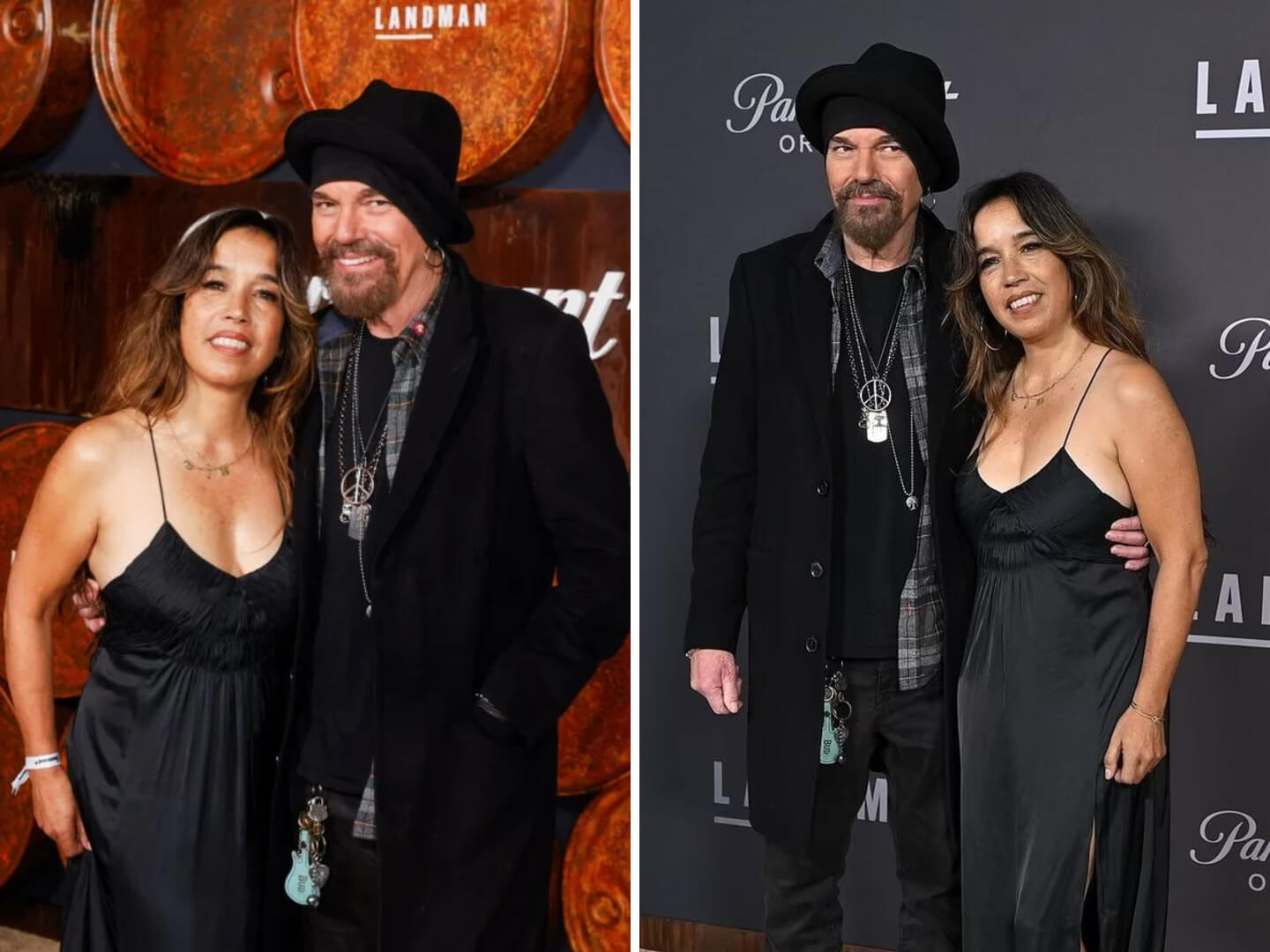
In November 2024, they attended the Los Angeles premiere of the Paramount+ series Landman. The event attracted attention because the couple is not regularly photographed together on red carpets.
They have also appeared at screenings and premieres for projects such as The Gray Man, The Judge, A Million Little Pieces and earlier Thornton films.
Angland generally appears comfortable at these events without behaving like someone pursuing personal celebrity coverage. Her presence is supportive, understated and consistent with the private life she has maintained throughout the relationship.
Life With Thornton
Living with a successful actor, director and musician involves long production schedules, travel, promotion and periods of intense professional focus. Angland’s own industry background likely gives her a practical understanding of those demands.
Thornton has credited his current family life with giving him greater balance. Accounts of their relationship describe Angland as someone who understands his working habits while helping preserve a more settled home environment.
That description should not reduce her role to simply supporting a famous spouse. Her established career indicates that she entered the relationship with her own knowledge, experience and professional identity.
Their marriage appears to function largely outside the publicity system surrounding Hollywood relationships. Rather than frequently commenting on one another, they seem to allow occasional appearances and Thornton’s limited remarks to speak for the partnership.
A Private Personality
Connie Angland does not appear to maintain a highly public social-media presence, and she rarely participates in interviews. As a result, very little is known about her personal opinions, hobbies or daily routine.
This absence of information has encouraged some websites to fill the gaps with assumptions. Unverified claims about her education, parents, lifestyle and finances are often repeated until they appear factual.
A responsible account of her life should distinguish between confirmed information and online speculation. Her film credits, relationship timeline, marriage and daughter are documented. Many additional biographical details are not.
Privacy is not evidence of secrecy or controversy. In Angland’s case, it seems to reflect a deliberate decision to keep her family life separate from the demands of public entertainment.
Net Worth Claims
Many celebrity websites publish estimates of Connie Angland’s net worth. These figures vary widely and are rarely supported by financial documents, direct statements or reliable reporting.
Her work in film effects undoubtedly provided professional income, and her household shares the financial advantages associated with Thornton’s successful career. However, that does not make any particular online estimate of her individual wealth accurate.
Without confirmed records, assigning a precise figure would be misleading. Film credits demonstrate professional experience, but they do not reveal salaries, investments, property ownership or current earnings.
The most honest conclusion is that Connie Angland’s personal net worth has not been reliably disclosed. Readers should be cautious when a website presents a detailed financial figure without explaining where the information originated.
More Than a Celebrity Wife
Public interest in Connie Angland is naturally connected to Billy Bob Thornton, but her own career deserves recognition. She participated in productions that required technical ability, artistic judgement and close collaboration with major effects studios.
Her work contributed to the appearance of creatures, prosthetics and practical elements that helped several successful films feel convincing. These responsibilities may be less glamorous than acting, yet they are essential to the finished result.
Angland’s life also offers an alternative picture of Hollywood. She has remained connected to the entertainment world without building her identity around constant exposure.
Her decision to value private family life does not erase her professional history. Instead, it shows that a person can work within the film industry, marry a famous actor and still maintain clear boundaries around personal attention.
Conclusion
Connie Angland is a special-effects craftsperson, former film-industry professional, wife and mother whose public story combines creative work with an unusually private personal life.
Her credits on films such as Men in Black, Phantoms, Stigmata, Big Momma’s House, Planet of the Apes and Men in Black II demonstrate a genuine career behind the camera. She worked in areas where precision and patience helped turn imaginative designs into physical objects that could exist convincingly on screen.
Her relationship with Billy Bob Thornton began in 2003, followed by the birth of their daughter in 2004 and a private marriage in 2014. More than two decades after they met, the couple continues to make only occasional public appearances.
Much of Angland’s early life remains unknown, and unsupported claims about her age, wealth or family background should not be treated as fact. What is clear is that she is more than the woman beside a famous actor. She is an experienced creative professional who has chosen to let her work and family life matter more than celebrity attention.
