

Introduction
David Beckham knighthood became one of the most talked-about moments in British sport because it marked a new chapter in the life of a man who has been in the public eye for more than three decades. For many people, Beckham is remembered first as the Manchester United star with a famous right foot, the England captain who carried huge national pressure, and the global figure who helped football move beyond the pitch.
His knighthood, however, is not only about goals, free kicks, trophies, or celebrity status. It is also about years of charity work, public service, and the way Beckham used his fame to support causes beyond football. In 2025, he was named in King Charles III’s Birthday Honours for services to sport and charity, a recognition that officially placed him among Britain’s most respected public figures.
David Beckham Knighthood Explained
The David Beckham knighthood means he is now formally known as Sir David Beckham. In the British honours system, a knighthood is awarded to people who have made a major contribution in their field or served society in a meaningful way. For Beckham, the honour was given for his long contribution to sport and charity.
This title is different from fame alone. Beckham had already been famous for years, but a knighthood reflects official national recognition. It shows that his impact was seen not just in football stadiums, but also in charity campaigns, public life, and the wider image of British sport around the world.
When Beckham Received the Honour
David Beckham was included in the 2025 King’s Birthday Honours List, where he was recognized for services to sport and charity. The announcement highlighted him as a former England captain whose influence had reached far beyond football. His long work as a UNICEF Goodwill Ambassador and his support for several charitable causes were also important parts of the recognition.
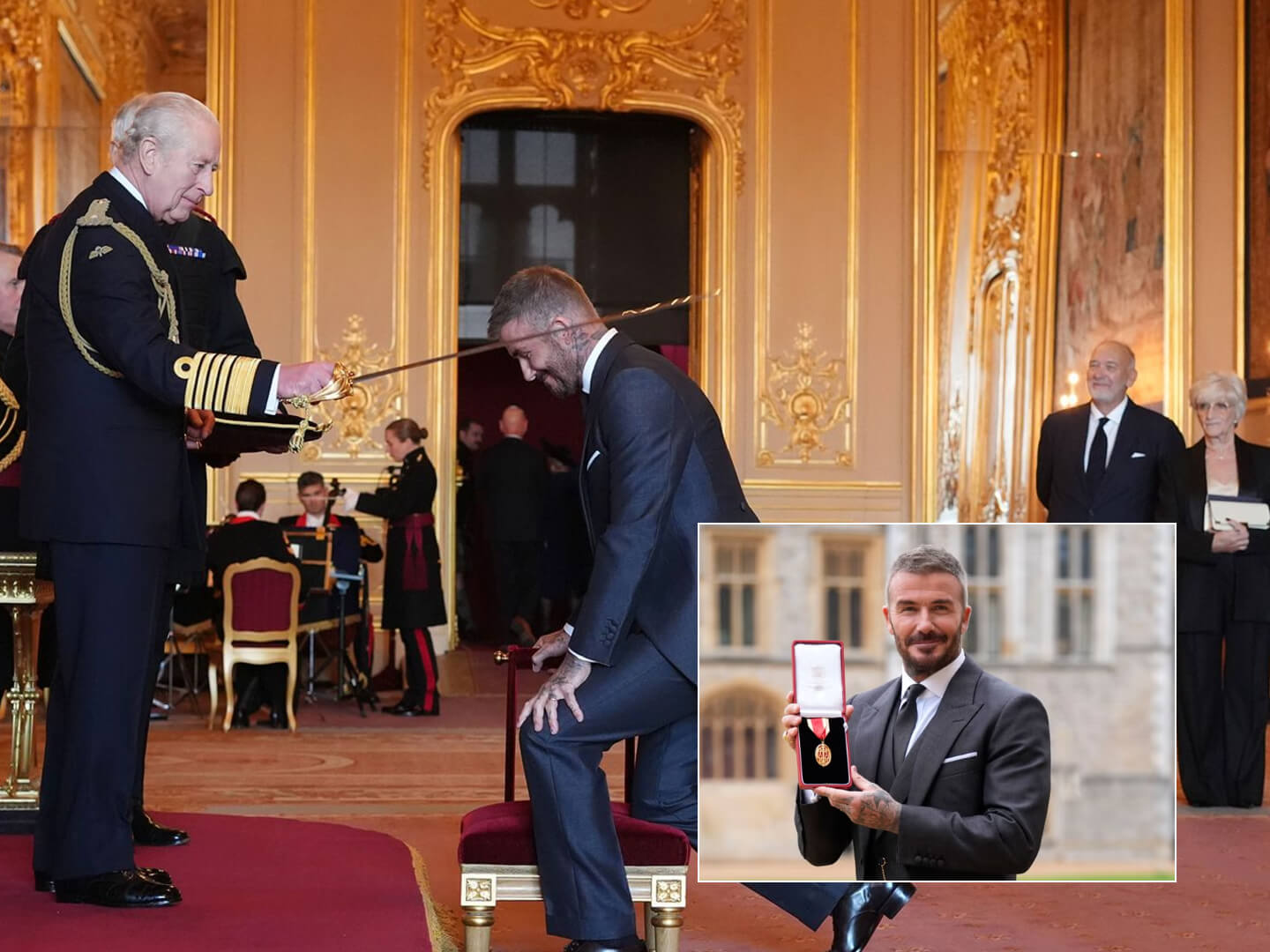
The formal ceremony came later. Beckham was officially knighted by King Charles III at Windsor Castle on November 4, 2025. The event turned the honour from a public announcement into a historic personal moment, giving him the official title Sir David Beckham.
Why He Was Knighted
Beckham was knighted because his public life brought together two major areas: football excellence and charitable service. His football career made him one of Britain’s best-known athletes, while his long humanitarian work gave his public profile a deeper purpose.
The honour was not based only on fame or sporting memories. Beckham’s charity work, especially through UNICEF and his 7 Fund, showed a long-term commitment to helping children and supporting vulnerable communities. He has also been connected with several other charitable causes, including hospitals, veterans’ support, air ambulance services, and community welfare projects.
A Career Built on Discipline
David Beckham’s football story began with Manchester United, where he grew from a promising young player into one of the most famous midfielders of his generation. He became part of the club’s famous 1990s era and helped United win major honours, including Premier League titles, FA Cups, and the UEFA Champions League.
His career later took him to Real Madrid, LA Galaxy, AC Milan, Paris Saint-Germain, and England. Across those years, Beckham built a reputation for crossing, passing, free kicks, leadership, and professionalism. His football journey lasted around two decades and made him one of the most recognizable English players in the world.
Manchester United Years
Beckham’s Manchester United years shaped the foundation of his legacy. He was not only technically gifted but also known for his work ethic, discipline, and ability to perform in major matches. His famous goal from the halfway line against Wimbledon in 1996 helped turn him into a national name, but his career was built on much more than one unforgettable moment.
At United, Beckham became part of a team that defined an era under Sir Alex Ferguson. The 1998–99 season, when Manchester United won the Premier League, FA Cup, and Champions League, remains one of the strongest symbols of that period. Beckham’s deliveries from wide areas and dead-ball situations were a major part of United’s attacking identity.
England and National Pride
Beckham’s England career gave his story a strong emotional connection with the British public. He earned 115 caps for England and captained the national team 59 times, achievements that placed him among the country’s most important modern football figures.
His time with England included pressure, criticism, redemption, and leadership. After the 1998 World Cup red card against Argentina, Beckham faced intense public criticism. Yet he rebuilt his image through performance, discipline, and commitment. His last-minute free kick against Greece in 2001, which helped England qualify for the 2002 World Cup, remains one of the defining moments of his international career.
A Global Football Figure
Beckham’s influence did not stop in England. His move to Real Madrid made him part of the famous Galácticos era, where he played alongside some of the biggest names in world football. His time in Spain strengthened his global appeal and showed that he could adapt to football outside England.
Later, his move to LA Galaxy changed the way many people viewed Major League Soccer. Beckham brought global attention to the American league and helped open the door for more international stars to take the competition seriously. His career after Europe showed that he was not only a footballer but also a sports ambassador with the ability to shift public interest.
Charity Beyond Football
A major reason behind the David Beckham knighthood is his charity work. Beckham became a UNICEF Goodwill Ambassador in 2005, after already supporting UNICEF’s work during his playing career. In 2015, he launched the 7 Fund for UNICEF to mark ten years as a Goodwill Ambassador.
The 7 Fund focuses on helping vulnerable children, especially girls, face barriers such as violence, bullying, child marriage, and missed education. This kind of work gave Beckham’s public profile a lasting humanitarian side. It showed that he could use his name not only to promote brands or football projects, but also to bring attention to children’s rights and global welfare.
The Long Road to Sir David
Beckham’s path to knighthood was not sudden. He had already received an OBE in 2003, an honour linked to his contribution to football. More than two decades later, the knighthood recognized a much wider body of work.
That long gap matters because it shows how his public role changed over time. In his twenties and thirties, Beckham was mostly seen as a football star and celebrity. By the time he became Sir David Beckham, his image had grown into something broader: former captain, charity ambassador, football owner, family figure, and British cultural symbol.
The Windsor Castle Ceremony
The official investiture at Windsor Castle gave the story a personal and emotional finish. Beckham was knighted by King Charles III, and the ceremony turned the honour into a proud public moment. It was a recognition of his decades-long contribution to sport and charitable causes.
The ceremony also carried emotional weight for Beckham and his family. He attended the event with Victoria Beckham, and the moment was widely described as one of the proudest days of his public life. The setting at Windsor Castle added a sense of tradition, history, and national respect to the occasion.
Victoria Beckham and Family Support
Victoria Beckham’s presence added a family dimension to the day. For years, David and Victoria Beckham have been one of the most recognizable couples in British public life. Their marriage, family, careers, and public appearances have often been covered by the media, but the knighthood ceremony was different because it centered on service and recognition.
After David became Sir David Beckham, Victoria became Lady Beckham. That detail gave the ceremony extra attention, but the heart of the moment remained David’s journey from a young footballer in London and Manchester to a knighted national figure.
What It Means for His Image
The David Beckham knighthood strengthens his public image in a way that celebrity alone cannot. Beckham has been many things to the public: footballer, captain, fashion figure, husband, father, businessman, and owner. The title of Sir adds another layer, one connected to service and national respect.
For younger readers, Beckham may be known as a global brand or as part of the ownership story behind Inter Miami. For older football fans, he remains the Manchester United and England midfielder whose crosses and free kicks shaped big matches. The knighthood connects these different versions of Beckham into one larger story.
Life After Football
Since retiring from football in 2013, Beckham has stayed highly visible. He has remained active through football ownership, charity work, brand partnerships, and ambassador roles. His post-playing career has shown that his influence did not end when he left the pitch.
His role with Inter Miami also shows how his football influence continued after he stopped playing. Beckham did not leave the sport behind; he moved into ownership, promotion, and long-term development. This helped keep him connected to the modern football conversation while also allowing him to shape the next stage of the game in the United States.
Why the Honour Matters
The honour matters because Beckham’s story is not perfect or simple. It includes huge success, public criticism, intense pressure, reinvention, and long-term commitment. That is partly why people connect with him. His career was not just a smooth rise from talent to fame. It included difficult moments that tested his character.
A knighthood does not erase the past; it recognizes the overall contribution a person has made. In Beckham’s case, that contribution includes football achievement, national service through sport, charity work, and the ability to represent British culture on a global stage.
Public Reaction
Public reaction to Beckham’s knighthood was largely shaped by memory. Many fans remembered his Manchester United years, his England captaincy, and his emotional connection to the national team. Others focused on his charity work and the fact that he had spent many years supporting UNICEF and children’s causes.
There was also a wider sense that Beckham had waited a long time for the honour. Because he had already been a household name for decades, the title of Sir David Beckham felt to many people like the closing of a circle rather than a sudden surprise.
More Than a Football Title
The David Beckham knighthood is important because it shows how a sports career can grow into something larger. Beckham started as a player known for technique and style, but his influence moved into charity, business, culture, and football development.
His story also reflects the modern role of athletes. Today, the most influential sports figures are often expected to do more than perform. They become ambassadors, campaigners, investors, and public voices. Beckham’s knighthood recognizes that wider kind of impact.
Conclusion
The David Beckham knighthood is not just a royal title added to a famous name. It is the result of decades spent in football, charity, public service, and British cultural life. From Manchester United to England, from Real Madrid to LA Galaxy, and from UNICEF work to royal recognition, Beckham’s journey has touched sport and society in equal measure.
Becoming Sir David Beckham marks one of the most meaningful moments of his public life. It reflects talent, discipline, resilience, and the decision to use fame for causes beyond personal success. For football fans, it is a proud reminder of a remarkable career. For the wider public, it is a story about how lasting respect is built over time.
