

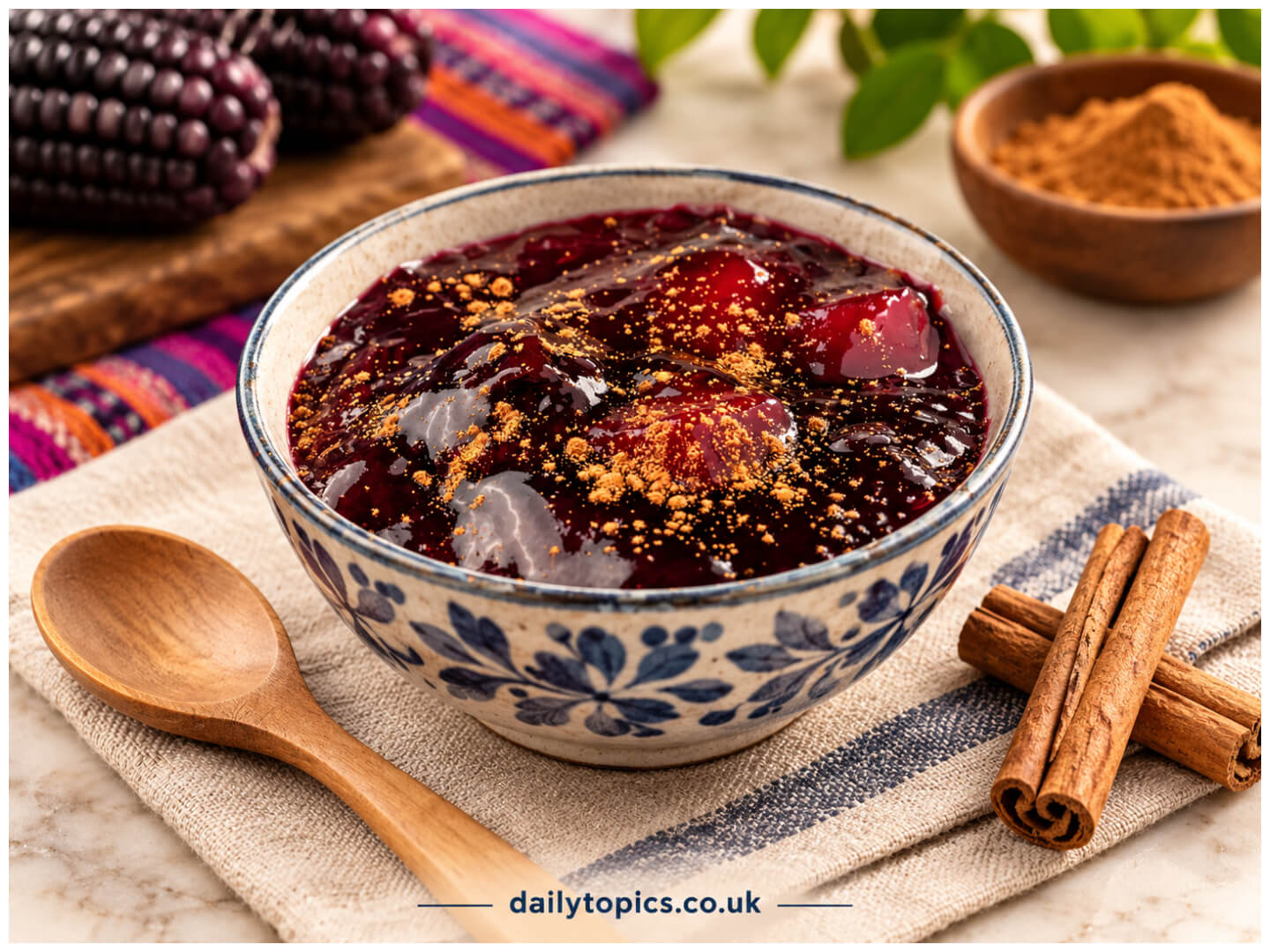
Finding the best Mazamorra Morada near me is about more than discovering a delicious dessert. It is an opportunity to experience one of Peru’s most treasured culinary traditions. With its beautiful purple colour, rich fruity flavour, and comforting texture, Mazamorra Morada has earned a special place in Peruvian homes, restaurants, and celebrations.
Made primarily from purple corn, fresh fruits, cinnamon, cloves, and sugar, this traditional dessert offers a distinctive combination of sweetness and gentle spice. Whether served warm on a cool evening or chilled after a meal, it brings together ingredients that have been part of Peruvian cooking for generations.
For anyone unfamiliar with Peruvian cuisine, Mazamorra Morada is an excellent introduction to the country’s traditional sweets. Although it may not appear on every Latin American restaurant menu, knowing where to search and what to look for can make finding an authentic serving much easier.
This guide explores the history, ingredients, taste, and cultural importance of Mazamorra Morada, along with practical advice for finding it at restaurants, bakeries, and specialty food shops near you.
What Is Mazamorra Morada?
Mazamorra Morada is a traditional Peruvian purple corn pudding known for its thick consistency, deep purple appearance, and sweet, fruity flavour. It is prepared by simmering purple corn with fruits and aromatic spices, then thickening the strained liquid with starch.
Unlike ordinary pudding, which often contains milk or cream, traditional Mazamorra Morada gets much of its flavour from purple corn, pineapple, apples, cinnamon, and cloves. The combination produces a dessert that is naturally colourful and pleasantly aromatic.
Small pieces of fresh or dried fruit are frequently added, giving each spoonful a slightly different texture. A sprinkle of ground cinnamon usually completes the dish.
Mazamorra Morada is particularly associated with Lima, Peru’s capital, although it is enjoyed throughout the country. Families prepare it at home, restaurants include it on dessert menus, and street vendors sell individual portions.
Its popularity comes partly from its familiar ingredients and comforting taste, but its importance extends beyond food. For many Peruvians, Mazamorra Morada represents family gatherings, childhood memories, and a connection to traditional cooking.
The History of Mazamorra Morada
The history of Mazamorra Morada reflects the different cultural influences that have shaped Peruvian cuisine over centuries.
Purple corn has been cultivated in the Andean region since pre-Hispanic times. Corn was an essential agricultural product for ancient Andean communities and was used in various foods and beverages.
Earlier corn-based preparations eventually developed into desserts influenced by ingredients and cooking traditions introduced during the colonial period.
The addition of sugar, cinnamon, cloves, and certain fruits helped transform older preparations into the sweet dessert enjoyed today.
The word mazamorra has historical connections to thick, porridge-like foods. Over time, the Peruvian purple corn version developed its own identity and became a recognisable part of the country’s culinary heritage.
Today, traditional recipes continue to be passed between generations. Some families prefer a thicker pudding with plenty of fruit, while others enjoy a softer consistency with a stronger cinnamon flavour.
These differences show how traditional dishes can develop individual characteristics while maintaining their cultural roots.
Why Mazamorra Morada Is Popular in Peru
Mazamorra Morada is more than an occasional restaurant dessert. It has long been part of everyday life in Peru, where traditional sweets are commonly enjoyed after meals, during family gatherings, and at local celebrations.
One reason for its popularity is its connection to familiar flavours. Purple corn, fruit, cinnamon, and cloves create a combination that many Peruvians recognise from childhood.
The dessert is also closely associated with October celebrations honouring the Señor de los Milagros, or Lord of Miracles, an important religious tradition in Lima.
October is often called Mes Morado, meaning Purple Month, because purple is strongly associated with these celebrations. Mazamorra Morada is among the traditional foods enjoyed during this period, alongside other Peruvian specialities.
However, the dessert is not limited to October. It is prepared and eaten throughout the year, making it a familiar choice in Peruvian homes and eateries.
Its lasting popularity demonstrates how food can connect generations through shared memories, seasonal customs, and traditional recipes.
Best Mazamorra Morada Near Me: Where to Start
When searching online for the best Mazamorra Morada near me, the first step is to look beyond ordinary dessert shops. This traditional sweet is most likely to appear at restaurants and businesses specialising in Peruvian food.
Peruvian restaurants are a good starting point because many offer traditional dishes alongside regional desserts. However, not every restaurant serves Mazamorra Morada daily, so checking the current menu is important.
Google Maps can help identify nearby establishments. Searching for phrases such as “Peruvian desserts near me,” “Mazamorra Morada restaurant,” or “authentic Peruvian bakery” may reveal useful options.
Customer reviews can also provide helpful information. Reviews mentioning homemade desserts, traditional recipes, or freshly prepared food may offer clues about an establishment’s approach to Peruvian cuisine.
Another useful option is to explore Latin American grocery stores. Some stock purple corn, packaged dessert mixes, or freshly prepared traditional sweets.
Before visiting, contact the restaurant or shop to confirm that Mazamorra Morada is available. A location may specialise in Peruvian cuisine without offering this particular dessert.
The best local choice will depend on your city, available restaurants, and personal preferences rather than a single universal ranking.
Where to Find Authentic Mazamorra Morada
Authentic Mazamorra Morada can appear in several different food establishments.
Traditional Peruvian restaurants are among the most promising places to begin. Restaurants with a broad Peruvian menu may include homemade desserts prepared using familiar family recipes.
Peruvian bakeries and dessert cafés are another possibility. Some businesses focus on traditional sweets and may offer Mazamorra Morada alongside arroz con leche, alfajores, and other popular treats.
Latin American food markets are also worth exploring, particularly in areas with established Peruvian communities. Speciality shops sometimes carry prepared desserts or ingredients for making them at home.
Peruvian cultural festivals and community food events can provide opportunities to experience traditional recipes. These gatherings may feature homemade food prepared by local vendors and families.
For people who prefer staying at home, takeaway restaurants and delivery services may be convenient alternatives.
Availability varies considerably by location, so checking menus and contacting businesses remains the most dependable approach.
How to Recognise Authentic Mazamorra Morada
Not every purple-coloured pudding offers the same experience as traditionally prepared Mazamorra Morada.
One of its most recognisable features is its rich purple colour, which comes from purple corn. Depending on the ingredients and preparation, the finished dessert may appear deep violet, reddish-purple, or almost burgundy.
The consistency is another important characteristic. Properly prepared Mazamorra Morada should be thick enough to hold comfortably on a spoon while remaining smooth and pleasant to eat.
It should not resemble a firm jelly, nor should it be excessively watery.
Traditional versions also contain noticeable fruit and spice flavours. Pineapple, apple, quince, cinnamon, and cloves may contribute different layers of taste.
Small pieces of fruit add interest to the texture and distinguish the dessert from plain flavoured pudding.
Freshly prepared versions may have a more pronounced fruit aroma, although well-made chilled or prepared-ahead portions can also be enjoyable.
Appearance alone cannot confirm authenticity. Asking about the ingredients and preparation method is often more useful than judging a dessert only by its colour.
Traditional Ingredients and Their Flavours
The ingredients used in Mazamorra Morada are relatively simple, but each contributes something important to the finished dessert.
Purple corn, or maíz morado, is the main ingredient. It provides the characteristic colour and forms the liquid base of the pudding.
Pineapple adds fruity sweetness and a mild acidic flavour. Some recipes use both the fruit and its peel while preparing the purple corn infusion.
Apples contribute a gentle sweetness and soft texture. Quince is another traditional ingredient used in certain recipes.
Cinnamon and cloves introduce warmth and fragrance, giving Mazamorra Morada its distinctive aroma.
Sugar provides sweetness, while a small amount of lemon or lime juice can balance the fruit flavours.
Dried fruits such as prunes, dried cherries, or dried apricots are sometimes included for additional texture and richness.
Finally, starch thickens the liquid into a pudding. Traditional recipes may use sweet potato flour or potato starch, while some modern preparations substitute cornstarch.
The precise combination varies between recipes, but the relationship between purple corn, fruit, spices, and starch remains central to the dessert.
What Does Mazamorra Morada Taste Like?
For someone trying Mazamorra Morada for the first time, its flavour can be pleasantly surprising.
The dessert combines fruity sweetness, gentle acidity, and aromatic spices. Unlike chocolate or vanilla pudding, Mazamorra Morada has a flavour built around fruit and purple corn.
Pineapple provides a noticeable fruity character, while cinnamon and cloves create warmth without necessarily making the dessert strongly spicy.
The texture is smooth and thick, with occasional pieces of soft fruit. Depending on the recipe, it can feel similar to a rich fruit compote or a soft pudding.
The sweetness level also varies. Some traditional preparations are quite sweet, while others allow the natural acidity of the fruit to remain more noticeable.
When served warm, the spices may seem more aromatic. Chilled Mazamorra Morada can feel refreshing, particularly after a rich meal.
For people who enjoy fruit-based desserts rather than dairy-heavy sweets, Mazamorra Morada offers something distinctly different.
How Much Does Mazamorra Morada Cost?
The price of Mazamorra Morada depends on where it is purchased, the portion size, and the ingredients used.
In Peru, traditional desserts are sold in settings ranging from street stalls to established restaurants. Prices can therefore vary significantly.
Outside Peru, the cost may be influenced by the availability of purple corn and other imported ingredients. A restaurant preparing the dessert from scratch may have different costs from a shop using a packaged mix.
Portion size also matters. A small dessert cup and a generous restaurant serving are not directly comparable.
Some restaurants serve Mazamorra Morada on its own, while others offer a combined portion with arroz con leche.
When comparing prices, it helps to consider freshness, serving size, ingredient quality, and whether the dessert is made in-house.
There is no dependable worldwide average price because markets and currencies differ. Checking local menus is the best way to understand what a reasonable portion costs in your area.
Mazamorra Morada and Arroz con Leche
One of the most popular ways to enjoy Mazamorra Morada in Peru is alongside arroz con leche, the country’s familiar rice pudding.
The combination is commonly known as combinado or clásico.
Mazamorra Morada contributes its purple colour, fruity flavour, and thick texture, while arroz con leche provides a creamy, milk-based contrast.
Together, the desserts create an appealing balance of flavours.
The nickname clásico is associated with Peruvian football culture, particularly the rivalry between Universitario de Deportes and Alianza Lima. The desserts’ purple and cream colours are linked to the traditional colours of these clubs.
For someone unfamiliar with Mazamorra Morada, ordering a combinado can be an enjoyable introduction.
It also offers the chance to experience two of Peru’s best-known traditional desserts in one serving.
Other Peruvian Desserts Worth Trying
If a nearby restaurant does not serve Mazamorra Morada, several other Peruvian sweets are worth considering.
Arroz con leche is a comforting rice pudding typically prepared with milk, sugar, and cinnamon. Its creamy texture makes it a familiar choice for people who enjoy traditional puddings.
Picarones are ring-shaped fried treats commonly prepared using squash and sweet potato. They are often served with a sweet syrup made from chancaca, an unrefined cane sugar product.
Suspiro a la Limeña is a rich dessert made with a sweet milk-based filling and a light meringue topping. It is particularly associated with Lima.
Turrón de Doña Pepa is another traditional sweet strongly connected to October celebrations in Peru. It features layered pastry-like bars covered with syrup and colourful decorations.
Each dessert represents a different aspect of Peruvian food culture, making them worthwhile alternatives when exploring a traditional restaurant menu.
Can You Order Mazamorra Morada Online?
Ordering Mazamorra Morada online may be possible in cities with Peruvian restaurants offering delivery.
Start by checking the websites or current online menus of nearby restaurants. Some businesses list desserts separately from their main menu, so browsing the full selection can be helpful.
Food delivery platforms may also display restaurants offering traditional Peruvian sweets.
Try searching for both “Mazamorra Morada” and “Peruvian purple corn pudding.” Restaurants sometimes use English descriptions rather than traditional Spanish names.
Before ordering, review the portion description carefully. Some listings may refer to prepared dessert mixes or purple corn beverages rather than the finished pudding.
You may also want to confirm whether the dessert is served warm or chilled.
For longer delivery journeys, ask whether it will be packaged in a secure container and whether any accompanying rice pudding comes separately.
A little checking can help ensure that the dessert arriving at your door is the one you intended to order.
Making Mazamorra Morada at Home
If finding a restaurant serving Mazamorra Morada proves difficult, preparing it at home is a practical alternative.
The traditional cooking process begins by simmering purple corn in water with aromatic ingredients such as pineapple peel, cinnamon, and cloves.
As the ingredients cook, the liquid develops a deep purple colour and absorbs the flavours of the fruit and spices.
The liquid is then strained, and additional fruits, dried fruits, and sugar may be added.
A starch mixture is gradually stirred into the liquid to produce the characteristic thick consistency.
The pudding is cooked until smooth and then finished with a little citrus juice, depending on the recipe.
Once ready, it can be served warm or allowed to cool. Ground cinnamon is commonly sprinkled over the top.
The cooking process requires attention, particularly when adding the starch, because constant stirring helps prevent lumps.
Home preparation also gives families the flexibility to adjust sweetness, fruit quantities, and thickness according to preference.
Traditional Peruvian recipes offer useful starting points for anyone interested in learning the preparation method.
Where to Buy Purple Corn
Purple corn is an essential ingredient for making authentic Mazamorra Morada, but it may not be available in every ordinary supermarket.
Latin American grocery stores are often the most promising places to search, particularly those carrying Peruvian food products.
Speciality international food shops may also stock dried purple corn or packaged products designed for making chicha morada and Mazamorra Morada.
When purchasing purple corn, check the product label to confirm that it is intended for culinary use.
Whole dried purple corn is suitable for preparing the traditional infusion. Packaged mixes can be convenient, although their ingredients, added sugar, and flavour may differ from homemade preparations.
Online specialty food retailers can offer another option when nearby shops do not carry the ingredient.
Finding the right corn is an important part of recreating the dessert’s characteristic flavour and colour.
Is Mazamorra Morada Healthy?
Mazamorra Morada contains several ingredients associated with traditional plant-based cooking, including purple corn, fruits, and spices.
Purple corn contains natural pigments called anthocyanins, which are responsible for much of its purple colouring.
However, the nutritional qualities of the finished dessert depend on the recipe, particularly the amount of added sugar, fruit, and starch.
Although the dish contains ingredients from plants, it should not automatically be treated as a health food or a substitute for a balanced meal.
It is best appreciated as a traditional dessert that can be enjoyed as part of a varied diet.
People with dietary restrictions should ask about specific ingredients rather than assuming every preparation is identical.
Traditional Mazamorra Morada is often prepared without milk, but restaurants may use different recipes, especially when offering modern variations.
Similarly, while many recipes rely on starches that do not naturally contain gluten, anyone who needs to avoid gluten should confirm the ingredients and preparation practices with the restaurant.
When Is Mazamorra Morada Traditionally Served?
Mazamorra Morada is enjoyed throughout the year in Peru, although it holds particular cultural significance during October.
During the celebrations of the Señor de los Milagros, traditional foods and desserts become an important part of the atmosphere in Lima.
The dessert is also served at family gatherings, community events, and ordinary meals.
There is no single correct serving temperature. Some people prefer it warm, especially when the weather is cooler, while others enjoy it chilled.
A small bowl or dessert cup is usually sufficient for serving, particularly when it follows a full meal.
Ground cinnamon is a familiar finishing touch that adds both fragrance and visual appeal.
For a more traditional experience, pairing it with arroz con leche offers a combination widely recognised throughout Peru.
Tips for Finding the Best Mazamorra Morada Near Me
Finding a good local serving becomes easier when you know what details to check.
Begin with restaurants that specialise in Peruvian cuisine rather than establishments that simply include one or two Latin American dishes.
Explore the full dessert menu and look for references to homemade preparations, purple corn, and traditional sweets.
Recent customer reviews can help, especially when they mention dessert quality, portion size, or particular menu items.
Photos provided by restaurants or customers may help you understand the appearance and presentation, although they cannot confirm taste or freshness.
Contacting the establishment is especially useful. A simple question about whether the Mazamorra Morada is prepared in-house can reveal more than a general restaurant rating.
You can also ask whether the restaurant serves the dessert alone or paired with arroz con leche.
Recommendations from local Peruvian communities may introduce you to smaller family-run businesses that are less visible in general search results.
Ultimately, the best Mazamorra Morada is one that balances traditional flavour, good preparation, and personal preference.
Conclusion
Searching for the best Mazamorra Morada near me is a wonderful way to explore the traditions of Peruvian cuisine. This distinctive purple corn pudding offers much more than an appealing appearance. Its combination of fruit, warm spices, and comforting texture reflects generations of culinary knowledge.
Whether you discover it in a family-run Peruvian restaurant, purchase it from a traditional bakery, or prepare it at home, Mazamorra Morada provides an opportunity to enjoy a dessert with deep cultural roots.
For the most authentic experience, look for places that value traditional ingredients, careful preparation, and familiar Peruvian flavours. Reading recent reviews, checking menus, and asking about homemade recipes can help you make a more informed choice.
And if you have the opportunity, try it alongside arroz con leche. The combination is an enduring favourite in Peru and a memorable introduction to the country’s rich dessert traditions.
