

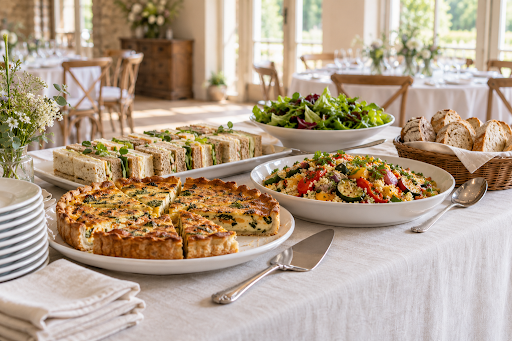
Food shapes the pace of a celebration. A seated meal brings everyone together at a particular time, while a buffet allows people to mingle and eat more informally. Before choosing individual dishes, it helps to decide how you want the occasion to feel and what your venue can comfortably accommodate.
For anyone arranging a celebration and researching Tewkesbury catering, a useful starting point is a short brief covering guest numbers, the venue, the occasion and when food should be served. Those details make menu discussions more productive. They also help identify practical requirements that are easy to overlook when the conversation starts with photographs of attractive dishes.
Decide Whether You Are Serving a Meal or Refreshments
An afternoon gathering with tea and cake needs a different food plan from an evening party that runs through dinner. Tell guests what to expect on the invitation, especially if the event falls across a normal mealtime. “Drinks and light refreshments” sets a different expectation from “buffet supper”, and that distinction helps people plan their day.
Build the menu around the role food will play. If guests are expecting dinner, a selection of small snacks may leave them hungry even when the table looks full. If a substantial meal follows a drinks reception, generous quantities of canapés could make the later courses unnecessary. Discuss the whole event timetable so that each stage complements the next.
Match the Service Style to the Space
Consider how people will eat, not simply where the food will stand. If most guests will be on their feet, choose dishes that are manageable with a small plate and minimal cutlery. Food that needs careful cutting becomes awkward when someone is also holding a drink.
For a buffet, walk through the room and imagine the queue. Guests should be able to reach the food without blocking the entrance, toilets or route used by serving staff. Putting drinks on a separate table can help spread activity around the room. Also consider guests who may find standing in a queue or carrying a plate difficult, and arrange assistance or table service where needed.
A seated meal requires its own checks. Once tables and chairs are positioned, there should still be practical access for serving and clearing. Ask the venue and caterer to agree the arrangement before you commit to a guest count that fills every available corner.
Check What the Venue Actually Provides
A venue described as having a kitchen may offer anything from a kettle and sink to a fully equipped commercial preparation space. Ask what appliances, refrigeration and work surfaces are available, and whether the caterer can inspect them beforehand. Photographs and an equipment list are useful if a visit is not possible.
Access times matter too. Confirm when deliveries can arrive, where vehicles can unload and whether equipment needs to be carried up steps or along narrow corridors. If you are using a marquee or garden, discuss water, power, shelter and the working area required for food preparation and service.
These details should influence the menu. Agreeing them early gives the caterer time to suggest suitable dishes and identify any equipment that needs hiring.
Give Each Dish a Purpose
A long menu can be harder to organise without making the meal more enjoyable. Start with a few substantial dishes and choose accompaniments that work together. Think about variety in flavour and texture, rather than adding several similar options simply to make the selection look bigger.
For example, a buffet built around savoury tarts, substantial salads and bread needs a different balance from one centred on a hot main course. Ask how quantities will be divided between dishes and how vegetarian or other requested meals will be allocated. Suitable options should remain available for the guests who need them.
Provide an updated attendance figure by the agreed deadline, including children and anyone joining later. Discuss portions with the caterer using that information rather than applying one assumed quantity to every guest.
Clarify What the Quote Includes
A price per person only becomes meaningful when you know what comes with it. Confirm whether the quote covers delivery, setup, serving staff, crockery, cutlery, linen and clearing away. Ask whether VAT and any equipment hire are included in the total.
Establish who will handle the small jobs during the event. Someone needs to replenish dishes, clear used plates and deal with spills. With delivery-only food, those responsibilities may fall to the host unless another arrangement has been made. Agreeing this beforehand helps you judge how much support you need to enjoy your own celebration.
Make Dietary Requirements Part of the Plan
Ask guests about allergies and dietary requirements when they respond, then pass their answers to the caterer before the menu is finalised. Confirm how suitable meals will be identified and served, and who will answer ingredient questions on the day. The Food Standards Agency’s guidance on providing allergen information explains that catered buffets need information for each individual food item, rather than a single statement covering the whole spread.
Bring the final arrangements together in one event brief: confirmed numbers, dietary requirements, access times, service times and the person responsible for each task. Share it with the venue and caterer, and resolve any gaps before the day. That preparation gives everyone a clear understanding of what is happening and allows you to spend more of the occasion with your guests.
