

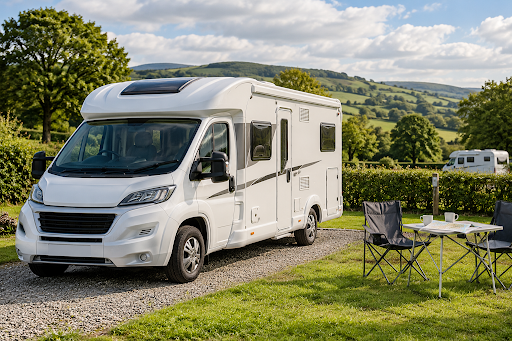
A first motorhome holiday involves learning a different way to travel. Your kitchen, bedroom and transport come with you, which changes everything from supermarket stops to days out. A little preparation makes those practical details easier, leaving more time to enjoy the places you have come to see.
If you are comparing new motorhomes, planning a realistic first trip can help you understand what you need from one. A weekend at a campsite within walking distance of a town makes different demands from a fortnight moving between remote locations. Thinking through the journey, overnight stops and everyday routines gives you something more useful to work with than a wish list of features.
Give Yourself Time at the First Stop
For a first outing, consider spending two or three nights at one campsite within a comfortable drive of home. That gives you time to practise setting up, understand the controls and discover what you have forgotten without also having to move on each morning.
Choose somewhere with clearly described facilities and check the arrival arrangements before booking. Knowing when reception closes, whether your pitch has electricity and where the service point is located removes several uncertainties. Aim to arrive in daylight with enough time to settle in before preparing dinner. A simple first meal is helpful when you are still working out where everything belongs.
Plan the Final Few Miles Carefully
The last part of a journey deserves particular attention. A route that looks straightforward on a map may approach a campsite through a village with tight turns or along an unsuitable lane. Read the campsite’s own directions before leaving, and compare them with your navigation system’s suggested approach. The Caravan and Motorhome Club specifically recommends using its campsite directions for the final approach.
Keep a note of your vehicle’s height, width and length where it is easy to check when safely parked. Make sure the height includes any equipment fitted to the roof. Before visiting an attraction or stopping in a town, check parking information for height barriers, bay sizes and restrictions. Finding a suitable place in advance is much easier than arriving at a busy car park and having to turn around.
Understand What Works When You Are Parked
Ask for a practical demonstration of the heating, hot water, fridge and electrical controls before your trip. Then try operating them yourself. Watching someone use a control panel can feel clear at the time, but repeating the process helps reveal anything you have misunderstood.
A leisure battery and a campsite electrical connection serve different purposes. The battery provides a 12-volt supply, while an electric hook-up provides mains electricity. Which appliances work from each source depends on the vehicle’s equipment, so check the handbook rather than assuming every socket will work when you are away from a hook-up.
Even when connected to a campsite supply, you need to manage demand. Several high-power appliances running together can exceed the pitch’s available capacity. Check the supply rating and appliance instructions, and get used to switching unnecessary equipment off before using something else.
Make Water and Waste Part of Your Routine
Locate the fresh-water filling point and waste outlets before setting off. Check that you have the appropriate hose and fittings, and ask how to read the tank indicators. Knowing how these systems work prevents a routine task becoming a frustrating interruption once you are away.
Fresh water, water from sinks and showers, and toilet waste need separate handling. Use a clean hose suitable for drinking water, keep its ends away from contaminated surfaces and follow the campsite’s instructions for the designated disposal points. The Camping and Caravanning Club’s guide to managing water and waste explains the equipment and hygiene considerations in more detail.
Before leaving a campsite, think about what facilities will be available at the next stop. Dealing with waste and checking your fresh-water supply while suitable facilities are close by can make the next arrival much simpler.
Think About How You Will Explore
Once the motorhome is parked and set up, decide how you want to get around. A campsite near walking routes, a bus stop or a village may suit a relaxed weekend particularly well. Check actual walking routes rather than distance alone: a short journey beside a busy road may be less appealing than a longer walk on a proper footpath.
If you plan to drive out each day, allow time to prepare the vehicle for travel and set up again afterwards. Shop for the first evening before arriving, so you do not have to pack everything away immediately because a basic ingredient is missing.
Build a Departure Routine You Can Repeat
Create a short departure checklist based on the vehicle handbook and handover instructions. Include securing loose belongings, checking cupboard catches, closing rooflights and windows, and disconnecting and stowing any external connections. Follow the manufacturer’s travel instructions for appliances and gas equipment.
Use the same routine before every journey, including short trips from the campsite. Finish with a walk around the vehicle to look for anything still connected, open or left behind.
After the first holiday, note which items you used, what caused inconvenience and what you would change. Those observations will help you prepare for a longer trip far more effectively than buying extra equipment before you know you need it.
